If you are planning or have recently undergone dental implant surgery, knowing what to expect during dental implant recovery can help you prepare for the healing period.
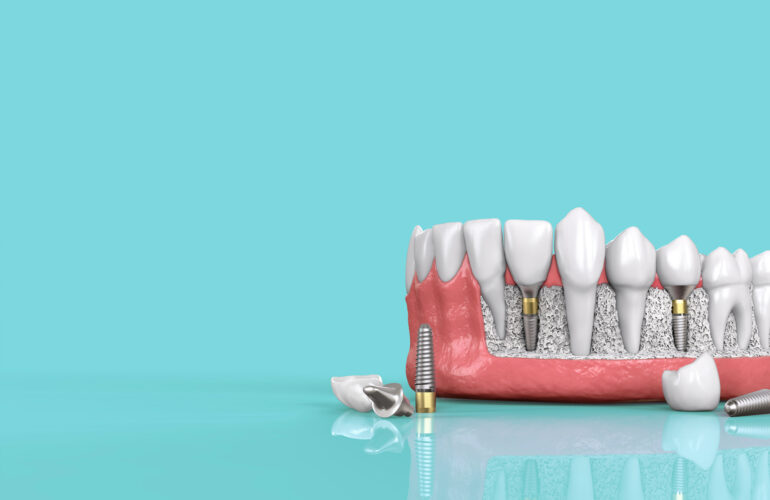
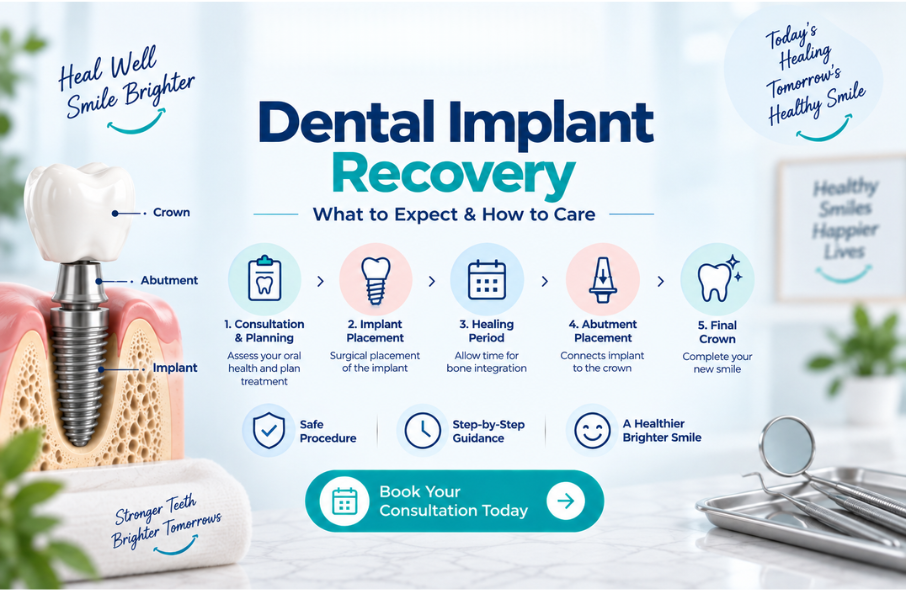
Dental implant treatment generally involves placing an implant into the jawbone, followed by a healing period before the final restoration is completed.
Recovery is different for every patient. Factors such as the number and location of implants, the condition of the gums and jawbone, additional procedures and individual healing response can influence the recovery process.
Here’s what you should know about recovery and aftercare following dental implant surgery.
What Happens During Dental Implant Recovery?
After an implant is placed, the surrounding tissues need time to heal.
The implant also needs to integrate with the surrounding jawbone before the final restoration is completed.
During recovery, you may experience temporary symptoms such as:
- Mild discomfort
- Tenderness
- Swelling
- Minor bleeding
- Sensitivity around the treatment area
These symptoms can vary depending on the procedure and individual healing response.
Your dentist will provide specific instructions based on your treatment.
Dental Implant Recovery Time: How Long Does It Take?
There is no single recovery timeline that applies to every patient.
The healing period can depend on:
- Number of implants
- Location of the implant
- Bone quality and quantity
- Gum health
- Whether bone grafting or another procedure was performed
- Individual healing response
- Overall treatment plan
The surgical site may begin healing soon after the procedure, but complete implant treatment takes longer because the implant needs time to integrate with the jawbone.
Your dentist will monitor the healing process and determine when you are ready for the next stage.
What to Expect Immediately After Implant Surgery
During the first few days, the treatment area may feel tender or swollen.
Your dental professional may provide instructions regarding:
- Food and drinks
- Oral hygiene
- Medication
- Physical activity
- Care of the surgical site
- Follow-up appointments
Follow these instructions carefully rather than relying on generic online advice.
If your dentist gives you instructions that differ from general recommendations, follow the instructions provided for your specific procedure.
Dental Implant Aftercare: Important Tips
1. Follow Your Dentist’s Instructions
The most important part of dental implant aftercare is following the instructions provided by your dental professional.
These instructions are based on the procedure you received and your individual oral health.
Do not change prescribed medication or treatment instructions without consulting your dentist.
2. Keep the Area Clean
Maintaining appropriate oral hygiene is important during recovery.
However, the surgical area may require special care immediately after treatment.
Your dentist can explain when and how to clean around the implant site.
Avoid unnecessarily disturbing the healing area.
3. Choose Appropriate Foods
Your dentist may recommend softer foods during the initial recovery period.
Depending on your treatment, suitable options may include foods that are easy to chew and less likely to irritate the surgical area.
As healing progresses, your dentist can advise you when to return to your usual diet.
4. Avoid Smoking and Tobacco
Smoking and tobacco use can negatively affect oral health and may interfere with healing.
If you are undergoing implant treatment, discuss tobacco use openly with your dental professional and follow their recommendations during recovery.
5. Attend Follow-Up Appointments
Follow-up appointments allow your dentist to assess healing and monitor the implant.
These visits are an important part of the overall treatment process.
Your dentist can determine whether healing is progressing appropriately and when the next stage of treatment can begin.
Can You Brush After Dental Implant Surgery?
Oral hygiene remains important after implant treatment, but the surgical area may need special care immediately following surgery.
Your dentist will tell you:
- When to resume brushing near the treatment site
- How to clean the surrounding teeth
- Whether any additional cleaning method is required
- When normal brushing can resume
Do not aggressively brush or disturb the surgical site during the early healing period.
What Can You Eat After Dental Implant Surgery?
Dietary recommendations can vary according to the procedure.
Initially, your dentist may recommend foods that are soft and easy to chew.
Examples can include:
- Soft cooked foods
- Smooth foods
- Soups at an appropriate temperature
- Yogurt
- Other foods recommended by your dental professional
Avoid foods that are excessively hard, crunchy or difficult to chew if they could disturb the treatment area.
Your dentist will let you know when you can gradually return to your regular diet.
Is Swelling Normal After Dental Implant Surgery?
Some swelling can occur following oral surgery.
The amount and duration can vary depending on the extent of treatment and individual response.
Following your dentist’s post-operative instructions can help support recovery.
However, if swelling becomes unusually severe, continues to worsen or is accompanied by other concerning symptoms, contact your dental professional.
How to Manage Discomfort During Implant Recovery
Some discomfort is possible after implant placement.
Your dentist may recommend appropriate pain-management measures based on your medical and dental history.
Take medication only as directed by your dental professional.
You should also avoid putting unnecessary pressure on the implant site while it is healing.
If pain is severe, persistent or unexpectedly increases, contact your dentist rather than attempting to manage the problem yourself.
When Can You Return to Normal Activities?
The appropriate time to return to normal activities depends on the procedure performed and your individual recovery.
For a straightforward procedure, your dentist may provide relatively simple activity instructions.
More extensive treatment may require additional precautions.
Always follow the specific activity restrictions provided by your dental professional.
Can You Exercise After Dental Implant Surgery?
You may need to temporarily modify strenuous physical activity after implant surgery.
The appropriate timeframe depends on the extent of the procedure and your recovery.
Ask your dentist when it is appropriate to resume:
- Gym workouts
- Running
- Heavy lifting
- Sports
- Other strenuous activities
Following personalised instructions can help avoid unnecessary stress during the early healing period.
What Happens After the Implant Heals?
Once the implant has healed sufficiently and your dentist determines that it is ready, treatment can progress to the restoration stage.
Depending on your treatment plan, this may involve:
- Abutment placement
- Impression or digital scanning
- Fabrication of the final restoration
- Crown placement
- Bite and fit adjustments
The final restoration replaces the visible portion of the missing tooth.
Signs You Should Contact Your Dentist
Although some discomfort and swelling may occur after surgery, contact your dental professional if you experience symptoms that concern you.
These may include:
- Severe or worsening pain
- Significant swelling
- Persistent bleeding
- Unusual discharge
- Fever or feeling unwell
- Problems with the implant or restoration
- Symptoms that do not improve as expected
Your dentist can determine whether further assessment or treatment is necessary.
How Can You Support Dental Implant Healing?
Good oral care is an important part of implant treatment.
You can support your recovery by:
- Following your dentist’s instructions
- Maintaining appropriate oral hygiene
- Avoiding tobacco
- Eating according to post-operative recommendations
- Attending follow-up appointments
- Protecting the treatment area
- Reporting unusual symptoms promptly
Long-term maintenance is also important once the final restoration has been placed.
Does Dental Implant Recovery Take Longer With Bone Grafting?
If bone grafting or another additional procedure is required, the treatment timeline may be longer.
This is because the additional procedure may require its own healing period before or alongside implant treatment.
Not every implant patient needs bone grafting.
Your dentist can determine whether additional bone support is necessary after evaluating the implant site.
Dental Implant Recovery in Pune
If you are planning dental implant treatment in Pune, discuss the expected recovery process with your dental professional before beginning treatment.
Dental Galaxy is a multi-speciality dental clinic in Pune with locations listed at Bajirao Road and Baner.
Patients can consult professional dental doctors regarding missing teeth, implant suitability, treatment stages and post-treatment care.
A personalised treatment plan can help you understand what to expect before, during and after implant placement.
Final Thoughts
Dental implant recovery is an important part of successful implant treatment.
While some tenderness, swelling or discomfort may occur after surgery, the overall healing process varies from patient to patient.
The implant requires time to heal and integrate with the surrounding jawbone before the final restoration can be completed.
Following your dentist’s aftercare instructions, maintaining good oral hygiene, avoiding tobacco and attending follow-up appointments can help support the recovery process.
If you are considering dental implants in Pune, consult a qualified dental professional to understand your treatment plan, expected healing period and aftercare requirements.