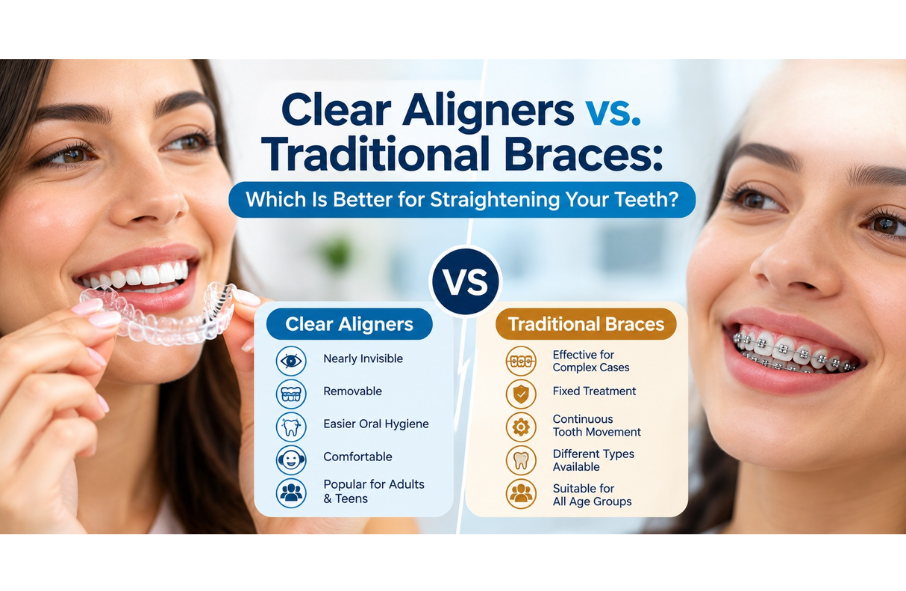
Clear Aligners vs. Traditional Braces: Which Is Better for Straightening Your Teeth?
A straight and confident smile can make a significant difference in your appearance and self-confidence. However, crooked teeth, gaps, crowded teeth and bite problems can make many people uncomfortable about smiling.
Fortunately, modern orthodontic dentistry offers several solutions to straighten teeth and improve your smile. Two popular options are clear aligners and traditional braces.
But which treatment should you choose? Are clear aligners more comfortable? Are traditional braces more effective? And how much time does each treatment require?
At Dental Galaxy, we believe that understanding your orthodontic options is the first step towards achieving a healthier and more confident smile.
What Are Clear Aligners?
Clear aligners are transparent, removable dental trays designed to gradually move your teeth into their desired positions.
They are custom-made according to your dental structure and are replaced with a new set at specific intervals as your teeth gradually move.
Some important features of clear aligners include:
- Transparent appearance
- Removable design
- Custom-made dental trays
- Smooth material for comfortable wear
- Convenient eating and brushing routine
- Suitable for many mild to moderate orthodontic cases
Clear aligners are particularly popular among adults and teenagers who prefer a less noticeable orthodontic treatment option.
What Are Traditional Braces?
Traditional braces are fixed orthodontic appliances used to correct misaligned teeth and bite problems.
They consist of brackets attached to the teeth and connected using orthodontic wires. These components apply controlled pressure to gradually move teeth into their correct positions.
Traditional braces offer several advantages:
- Effective for a wide range of orthodontic problems
- Suitable for complex tooth movements
- Fixed treatment that does not depend on removing and reinserting trays
- Available in different styles and materials
- Continuous orthodontic force throughout treatment
Clear Aligners vs Traditional Braces: Key Differences
Both treatments are designed to straighten teeth, but their appearance, maintenance and daily convenience are different.
| Feature | Clear Aligners | Traditional Braces |
|---|---|---|
| Appearance | Nearly invisible | Visible brackets and wires |
| Removability | Removable | Fixed to teeth |
| Eating | Remove before eating | Some food restrictions |
| Oral Hygiene | Easy to brush and floss after removal | Requires additional cleaning around brackets |
| Comfort | Smooth plastic trays; pressure may occur | Brackets and wires may cause irritation |
| Compliance | Requires consistent daily wear | Fixed appliance |
| Complex Cases | Suitable for selected cases | Can treat a wider range of complex cases |
| Follow-up | Periodic orthodontic monitoring | Regular adjustments |
5 Benefits of Choosing Clear Aligners
1. Nearly Invisible Appearance
One of the biggest advantages of clear aligners is their transparent design. They are less noticeable than traditional metal braces, making them a popular choice for working professionals and adults.
2. Removable Convenience
Clear aligners can be removed while eating, drinking anything other than water, brushing and flossing. This allows you to maintain your regular oral hygiene routine more easily.
3. Comfortable Design
Clear aligners are made from smooth plastic material without traditional metal brackets or wires. However, some pressure or temporary discomfort may occur when starting a new set.
4. Easier Oral Hygiene
Since aligners are removable, you can brush and floss your teeth normally. This makes maintaining oral hygiene more convenient during treatment.
5. Digital Treatment Planning
Many clear aligner treatments use digital scans and computer-assisted planning to map the expected movement of your teeth.
5 Benefits of Traditional Braces
1. Suitable for Complex Dental Problems
Traditional braces can manage a broad range of orthodontic problems, including significant crowding, tooth rotations and certain bite corrections.
2. Continuous Treatment
Braces remain attached to your teeth throughout treatment. You do not need to remember to insert them after meals.
3. Different Types Available
Patients may be able to choose from different orthodontic options, including metal braces, ceramic braces and other specialised systems.
4. Controlled Tooth Movement
Orthodontists can use brackets, wires and additional appliances to achieve precise tooth movements.
5. Suitable for Different Age Groups
Traditional braces can be used for children, teenagers and adults when clinically appropriate.
How Long Does Teeth Straightening Treatment Take?
The duration of orthodontic treatment depends on the severity of misalignment, the type of appliance used, individual tooth movement and patient compliance.
Some mild cases may require less time, while complex orthodontic conditions can take considerably longer.
Factors affecting treatment duration include:
- Severity of tooth crowding
- Spacing between teeth
- Bite alignment problems
- Age and individual dental condition
- Consistency in wearing clear aligners
- Following orthodontic instructions
Your orthodontist will provide a personalised treatment estimate after examining your teeth.
Clear Aligners vs Braces: Which Is More Affordable?
The cost of orthodontic treatment varies depending on the complexity of your case, treatment duration, materials and dental clinic.
Traditional braces may be a suitable option for patients looking for different treatment choices, while clear aligners may involve additional costs depending on the brand and treatment plan.
Instead of choosing treatment based only on price, consider its suitability, expected results, maintenance requirements and long-term oral health benefits.
Always request a personalised treatment estimate from your dental professional.
Who Is the Right Candidate for Clear Aligners?
Clear aligners may be suitable for people who have:
- Mild to moderate crowded teeth
- Small gaps between teeth
- Certain bite alignment issues
- Mild tooth rotations
- A preference for removable orthodontic appliances
However, not every orthodontic condition can be treated with clear aligners. Complex cases may require traditional braces or a combination of orthodontic techniques.
Who Should Consider Traditional Braces?
Traditional braces may be recommended for people with:
- Severe dental crowding
- Complex tooth rotations
- Significant bite problems
- Complex orthodontic movements
- Difficulty maintaining consistent aligner wear
An orthodontic examination is necessary to determine the most appropriate treatment.
Tips to Maintain Your Teeth During Orthodontic Treatment
Whether you choose clear aligners or traditional braces, maintaining good oral hygiene is essential.
- Brush your teeth at least twice daily.
- Floss regularly to remove food particles and plaque.
- Attend scheduled orthodontic appointments.
- Limit sugary foods and beverages.
- Clean your clear aligners according to your dentist’s instructions.
- Avoid hard and sticky foods if you wear traditional braces.
- Wear retainers as recommended after treatment.
Why Choose Dental Galaxy for Orthodontic Consultation?
Choosing the right orthodontic treatment requires understanding your dental structure, alignment concerns and personal expectations.
At Dental Galaxy, we believe every patient deserves personalised attention and appropriate dental guidance.
A professional consultation can help you understand your teeth-straightening options and determine which approach may be suitable for your smile.
Our approach focuses on:
- Comprehensive dental evaluation
- Individualised treatment recommendations
- Oral health assessment
- Patient comfort and guidance
- Long-term smile maintenance
Frequently Asked Questions (FAQs)
1. Are clear aligners better than traditional braces?
Clear aligners offer a removable and discreet option for suitable orthodontic cases, while traditional braces can treat a wider range of complex tooth movements. The best option depends on an orthodontic assessment.
2. How long does clear aligner treatment take?
Treatment duration varies depending on the complexity of tooth movement and patient compliance. Your orthodontist can estimate the treatment time.
3. Can I eat with clear aligners?
Clear aligners should generally be removed before eating or drinking anything other than plain water.
4. Are traditional braces painful?
Some discomfort or pressure may occur after braces are fitted or adjusted. This usually improves as the mouth adapts.
5. Can adults get clear aligners?
Yes. Adults can be suitable candidates for clear aligner treatment depending on their dental and orthodontic condition.
6. Do clear aligners need to be worn every day?
Yes. Most clear aligner treatments require wearing the aligners for approximately 20 to 22 hours daily, following the orthodontist’s instructions.
7. Do I need retainers after braces or clear aligners?
Yes. Retainers are generally recommended after orthodontic treatment to help maintain the new position of your teeth and reduce the risk of relapse.
Ready to Transform Your Smile?
A confident smile starts with healthy and properly aligned teeth. Whether you are considering clear aligners or traditional braces, choosing the right treatment is essential for achieving lasting results.
Book an orthodontic consultation at Dental Galaxy to understand your treatment options and take the first step towards a straighter, healthier smile.
Dental Galaxy – Your Smile, Our Priority!