A dental crown can restore the shape, strength and appearance of a damaged or weakened tooth. But one of the most common questions patients have before getting a crown is: how long do dental crowns last?
The lifespan of a dental crown depends on several factors, including the crown material, condition of the underlying tooth, bite forces, oral hygiene and daily habits.
A well-maintained crown can remain functional for many years, but it is not necessarily a permanent restoration. Understanding what affects crown longevity can help you protect your investment and maintain your oral health.
What Is a Dental Crown?
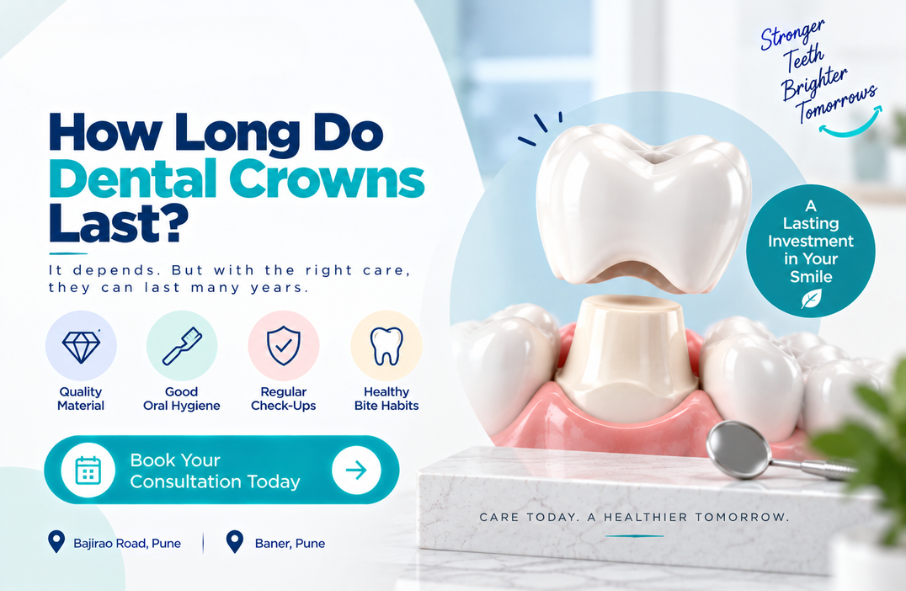
A dental crown is a custom-made restoration that covers a damaged or weakened tooth. It can help restore the tooth’s shape, function and appearance.
Dentists may recommend a crown when a tooth has significant decay, a large restoration, a crack or substantial structural damage. Crowns may also be used after root canal treatment when the remaining tooth structure requires additional protection.
The type of crown selected depends on factors such as the location of the tooth, its functional demands, appearance and the amount of healthy tooth structure remaining.
How Long Do Dental Crowns Last?
There is no single lifespan that applies to every dental crown.
With appropriate care, dental crowns can often last many years, but their actual longevity varies from person to person.
Some crowns may remain in good condition for a long time, while others may require earlier replacement because of problems such as decay around the crown, damage, gum changes or excessive biting forces.
The goal is not simply to get a crown that lasts as long as possible, but to ensure that the crown and the underlying tooth remain healthy and functional.
What Affects Dental Crown Lifespan?
Several factors can influence how long a crown lasts.
1. Crown Material
Crowns can be made from different materials, including:
- Zirconia
- Ceramic
- Porcelain-fused-to-metal
- Metal
Each material has different characteristics relating to strength, appearance and suitability.
The best option depends on the tooth being restored and your individual treatment requirements.
2. Oral Hygiene
A crown itself cannot develop tooth decay in the same way as natural tooth structure, but the tooth underneath and around the crown can still be affected by plaque and bacteria.
Regular brushing, cleaning between the teeth and routine dental examinations can help protect the surrounding tooth and gums.
3. Bite Forces
Heavy biting forces can place additional stress on a dental crown.
People who regularly grind or clench their teeth may put more pressure on their crowns. In some cases, a dentist may recommend a protective night guard to reduce excessive forces during sleep.
4. The Condition of the Tooth Underneath
A crown can only be as healthy as the tooth and supporting structures beneath it.
If the underlying tooth develops decay, cracks or other problems, the crown may need to be evaluated even if the crown itself appears intact.
This is why maintaining the tooth underneath the crown is important for long-term success.
5. Food and Lifestyle Habits
Certain habits can increase the risk of crown damage.
For example, using your teeth to open packages, biting very hard objects or frequently chewing extremely hard foods may put unnecessary stress on a crown.
Avoiding these habits can help protect both the crown and your natural teeth.
How Can You Make a Dental Crown Last Longer?
Good maintenance can help support the longevity of your crown.
Brush Twice a Day
Brush your teeth twice daily using a suitable fluoride toothpaste. Pay attention to the gumline around the crowned tooth.
Clean Between Your Teeth
Food and plaque can accumulate around the crown and neighbouring teeth. Flossing or using an appropriate interdental cleaning method can help keep these areas clean.
Attend Regular Dental Check-Ups
Routine dental visits allow your dentist to examine the crown, surrounding gums and underlying tooth.
Problems can sometimes be identified before they become more significant.
Avoid Using Teeth as Tools
Do not use crowned teeth to open packets, tear plastic or bite non-food objects. These habits can increase the risk of chipping, cracking or loosening the restoration.
Address Teeth Grinding
If you clench or grind your teeth, discuss it with your dentist. Excessive bite forces may affect the longevity of crowns and other restorations.
What Are the Signs That a Dental Crown May Need Replacement?
A crown does not automatically need replacement simply because it has been in your mouth for a certain number of years.
Instead, your dentist will assess its condition.
Possible warning signs include:
- A loose or moving crown
- Cracks or visible damage
- Chipping
- Pain or sensitivity around the crowned tooth
- Food repeatedly getting trapped around the crown
- Swelling or gum problems near the crown
- Decay around the edges
- Changes in the way the teeth bite together
If you notice any of these symptoms, it is worth having the crown examined rather than waiting for the problem to become worse.
Can a Dental Crown Last Forever?
No dental crown should be assumed to last forever.
Even when a crown remains intact, the tooth underneath can develop problems over time. Changes in your bite, gum health, oral hygiene and everyday habits can also affect the restoration.
Regular dental examinations can help determine whether an existing crown is still functioning properly or requires treatment.
Does a Root Canal Tooth Always Need a Crown?
Not every root canal-treated tooth is identical.
After root canal treatment, the amount of remaining tooth structure and the tooth’s location and functional demands are important considerations when deciding whether a crown is appropriate.
Back teeth generally experience significant chewing forces, so a protective restoration may be recommended when substantial tooth structure has been lost.
Your dentist can assess the individual tooth and recommend the appropriate restoration.
What Happens If a Dental Crown Breaks or Comes Loose?
If a crown becomes loose, chipped or damaged, avoid chewing hard foods on that side and contact your dentist.
Do not attempt to permanently fix the crown yourself.
Your dentist can determine whether the crown can be repaired, re-cemented or needs replacement. The underlying tooth should also be checked for decay, fracture or other problems.
Prompt evaluation may help prevent further damage.
Dental Crown Replacement: When Is It Necessary?
Replacement may be considered when a crown is significantly damaged, no longer fits properly, has recurrent decay around it or when the underlying tooth requires further treatment.
The dentist will generally examine the crown and tooth before deciding what should be done.
In some cases, the existing crown may still be usable. In others, replacing it may provide a better long-term restoration.
How Can You Protect Your Dental Crown?
Think of your crown as part of your overall oral health rather than a restoration that requires no maintenance.
A simple routine can help:
- Brush twice a day.
- Clean between your teeth every day.
- Avoid chewing extremely hard objects.
- Do not use teeth as tools.
- Address teeth grinding or clenching if present.
- Attend regular dental check-ups.
- Seek dental advice if the crown becomes loose, painful or damaged.
These habits can help protect the crown as well as the natural tooth supporting it.
When Should You See a Dentist?
You should consider a dental examination if your crown:
- Feels loose
- Becomes painful
- Develops sensitivity
- Chips or cracks
- Changes your bite
- Is surrounded by swollen or bleeding gums
- Has food consistently getting trapped around it
Early assessment can help identify whether the issue involves the crown, the underlying tooth or the surrounding gums.
Dental Crowns in Pune
If you are considering a new crown or are concerned about an existing restoration, a dental examination is the best way to understand your options.
Dental Galaxy is a multi-speciality dental clinic in Pune offering dental care, including restorative and cosmetic dental treatments. The clinic has locations listed at Bajirao Road and Baner, Pune.
A dentist can evaluate the condition of your tooth, existing restoration and bite before recommending whether a crown is appropriate or whether an existing crown needs further attention.
Conclusion
So, how long do dental crowns last?
The answer depends on the crown material, oral hygiene, bite forces, condition of the underlying tooth and everyday habits. A properly planned and maintained crown can provide long-term service, but it should still be monitored through regular dental check-ups.
Taking care of your crown means taking care of the natural tooth underneath it. Good brushing, interdental cleaning, avoiding damaging habits and regular dental examinations can all contribute to maintaining your restoration.
If you have a damaged, loose or ageing crown, consult a dentist to determine whether it can continue to be used or whether replacement is appropriate.