A persistent toothache, sensitivity to hot or cold, swelling or pain while chewing can sometimes indicate a problem inside the tooth.
When the soft tissue inside a tooth becomes infected or severely damaged, root canal treatment (RCT) may be recommended to treat the affected tooth and help preserve it.
If you are searching for root canal treatment in Pune, understanding the procedure, possible discomfort, recovery and cost factors can help you make an informed decision.
What Is Root Canal Treatment?
Root canal treatment is a dental procedure used to treat problems affecting the inside of a tooth.
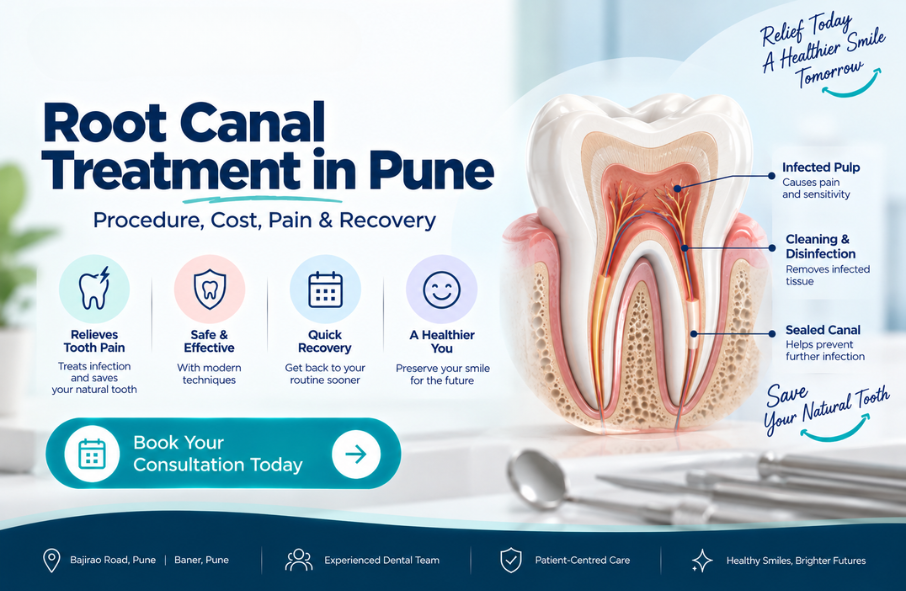
The inside of a tooth contains soft tissue known as the pulp. When the pulp becomes infected or damaged, treatment may be required.
During an RCT, the dentist removes the affected tissue, cleans and disinfects the root canal system, and seals the treated area.
A restoration such as a dental crown may be recommended depending on the condition and location of the tooth.
Why Is a Root Canal Needed?
A root canal may be recommended when the pulp inside a tooth becomes infected or significantly damaged.
Common causes can include:
- Deep tooth decay
- Cracked or damaged teeth
- Dental trauma
- Repeated dental procedures
- Bacterial infection
Not every toothache requires a root canal.
A dentist needs to examine the tooth and determine the cause of the symptoms before recommending treatment.
What Are the Symptoms of a Tooth That May Need RCT?
Possible symptoms can include:
- Persistent toothache
- Sensitivity to hot or cold
- Pain while chewing
- Swelling around the tooth
- Tenderness
- Discolouration of the tooth
- A recurring problem in the same area
Some teeth with pulp problems may not cause obvious symptoms.
Therefore, if you have persistent dental symptoms, a professional examination is important.
Root Canal Treatment Procedure: Step by Step
The exact procedure can vary depending on the tooth and the complexity of the case.
Step 1: Dental Examination
Your dentist examines the affected tooth and evaluates your symptoms.
Diagnostic imaging may be recommended to understand the condition of the tooth and surrounding structures.
Step 2: Local Anaesthesia
Local anaesthesia is used to numb the treatment area.
This helps manage discomfort during the procedure.
Step 3: Accessing the Tooth
The dentist creates an opening in the tooth to access the affected pulp and root canal system.
Step 4: Removing the Infected or Damaged Tissue
The affected pulp tissue is removed from inside the tooth.
Step 5: Cleaning and Shaping
The root canals are carefully cleaned and prepared for sealing.
This stage helps remove bacteria and affected tissue from the canal system.
Step 6: Sealing the Root Canals
Once the canals have been appropriately cleaned and prepared, they are sealed to help prevent further infection.
Step 7: Final Restoration
Depending on the condition and location of the tooth, your dentist may recommend a filling or dental crown to restore the tooth.
A crown may be particularly considered when the remaining tooth structure requires additional protection.
Is Root Canal Treatment Painful?
One of the most common concerns about RCT is root canal pain.
Modern root canal treatment is performed using appropriate local anaesthesia to numb the treatment area.
You may experience pressure or sensations during the procedure, but your dentist will take appropriate measures to manage discomfort.
After treatment, some tenderness or sensitivity may occur while the tooth settles.
If you experience significant or persistent pain after treatment, contact your dentist.
How Long Does Root Canal Treatment Take?
The treatment time varies depending on:
- Which tooth is being treated
- Complexity of the root canal system
- Severity of the infection
- Condition of the tooth
- Whether additional procedures are required
Some cases can be completed in fewer appointments, while more complex cases may require additional visits.
Your dentist can explain the expected treatment schedule after examining your tooth.
What Is Root Canal Recovery Like?
Following RCT, the treated tooth may feel slightly different for a short period.
You may experience:
- Mild tenderness
- Sensitivity while chewing
- Temporary discomfort
Your dentist will provide specific aftercare instructions based on your treatment.
Avoid putting unnecessary pressure on the treated tooth until your dentist confirms that it is appropriate to use it normally.
Do You Need a Crown After Root Canal Treatment?
Not every root canal-treated tooth necessarily requires the same restoration.
The decision depends on factors such as:
- Tooth location
- Amount of remaining tooth structure
- Extent of damage
- Functional requirements
- Risk of further damage
Your dentist will determine whether a crown or another restoration is appropriate.
What Happens If You Delay Root Canal Treatment?
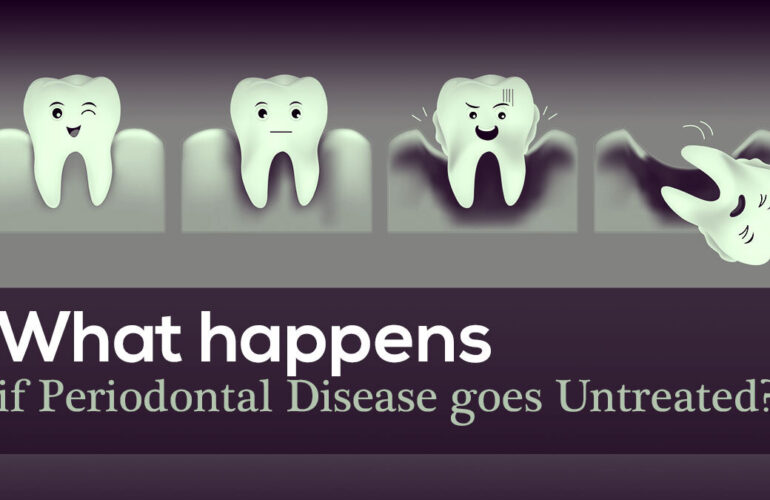
If a tooth has an infection or significant pulp damage requiring treatment, delaying care may allow the problem to progress.
Depending on the condition, untreated infection can potentially affect the tissues surrounding the tooth.
A severely damaged or infected tooth may eventually become more difficult to treat.
If you have persistent tooth pain, swelling or other concerning symptoms, arrange a dental examination rather than waiting for the problem to resolve on its own.
Root Canal Treatment vs Tooth Extraction
When a tooth is significantly infected or damaged, treatment options may include saving the tooth with root canal treatment or removing it when it cannot be predictably preserved.
If the tooth can be appropriately treated and restored, preserving the natural tooth may be considered.
Extraction removes the tooth, after which a replacement option may need to be considered.
Your dentist can assess the tooth and explain which options are appropriate.
How Much Does Root Canal Treatment Cost in Pune?
The root canal treatment cost in Pune can vary from one patient to another.
Factors that may affect the cost include:
- Tooth being treated
- Complexity of the root canal
- Number of canals
- Severity of the problem
- Diagnostic requirements
- Type of final restoration
- Additional treatment required
A front tooth and a back tooth can require different levels of treatment.
For this reason, it is better to obtain an individual treatment plan rather than relying on a single advertised price.
How Can You Take Care of a Root Canal-Treated Tooth?
Good oral hygiene remains important after RCT.
You should:
- Brush regularly
- Clean between your teeth
- Follow your dentist’s instructions
- Attend recommended follow-up appointments
- Protect the restored tooth from unnecessary stress
- Have regular dental check-ups
A root canal-treated tooth still requires normal dental care.
Can a Root Canal-Treated Tooth Get Infected Again?
In some situations, a previously treated tooth can develop problems again.
Possible reasons may include:
- New decay
- Leakage around the restoration
- Persistent or recurrent infection
- Cracks or damage
- Complex canal anatomy
If a previously treated tooth becomes painful or develops other symptoms, your dentist can evaluate it and determine whether further treatment is needed.
When Should You See a Dentist for Tooth Pain?
Do not ignore persistent tooth pain.
You should consider arranging a dental examination if you experience:
- Persistent toothache
- Swelling
- Pain when chewing
- Prolonged sensitivity
- Tooth discolouration
- Recurring pain in the same tooth
Early evaluation can help determine the cause and identify appropriate treatment options.
Root Canal Treatment in Pune at Dental Galaxy
If you are searching for root canal treatment in Pune, choosing a dental clinic that provides proper diagnosis and treatment planning is important.
Dental Galaxy is a multi-speciality dental clinic in Pune with locations listed at Bajirao Road and Baner.
Patients experiencing tooth pain or suspected infection can consult professional dental doctors for evaluation and discuss appropriate treatment options.
The recommended treatment depends on the condition of the affected tooth and surrounding tissues.
Final Thoughts
Root canal treatment can be used to treat infection or damage affecting the inside of a tooth and may help preserve the natural tooth when appropriate.
The procedure generally involves examination, anaesthesia, removal of affected pulp, cleaning and shaping of the canals, sealing and appropriate restoration.
While some patients worry about pain, modern RCT is performed with appropriate anaesthesia and pain-management techniques. Temporary tenderness may occur after treatment.
If you have persistent tooth pain, swelling or sensitivity, don’t rely on home remedies or wait indefinitely. A dental examination can help identify the cause and determine whether root canal treatment in Pune is appropriate for you.