
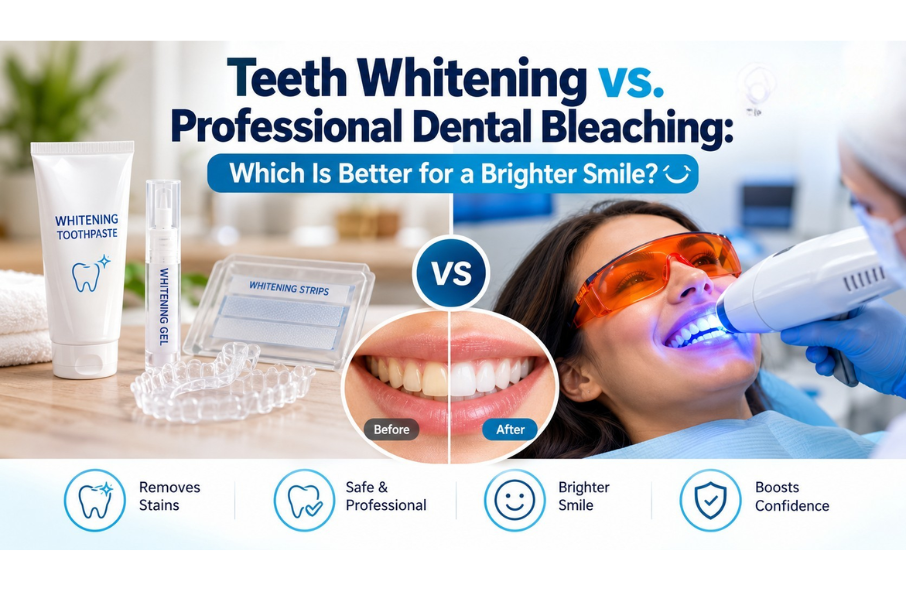
Teeth Whitening vs. Professional Dental Bleaching: Which Is Better for a Brighter Smile?
A bright, healthy smile can make a lasting impression. However, everyday habits such as drinking tea and coffee, consuming dark-coloured foods, smoking and ageing can gradually make your teeth appear yellow or stained.
With the growing popularity of cosmetic dentistry, people are exploring different ways to achieve a whiter smile. From whitening toothpastes and over-the-counter kits to professional dental bleaching, several options are available.
But which treatment actually works best?
At Dental Galaxy, we believe achieving a brighter smile should always begin with healthy teeth and gums.
What Is Teeth Whitening?
Teeth whitening is a cosmetic dental procedure designed to improve the appearance of discoloured or stained teeth. Depending on the method used, whitening products may remove surface stains or chemically lighten the natural colour of teeth.
- Whitening toothpaste
- Whitening strips
- Whitening gels
- Dentist-prescribed whitening kits
- Professional in-office whitening
What Is Professional Dental Bleaching?
Professional dental bleaching is a cosmetic procedure performed or supervised by a qualified dental professional. It uses controlled concentrations of whitening agents, commonly hydrogen peroxide or carbamide peroxide, to break down tooth discolouration.
Before recommending treatment, a dentist examines your teeth and gums to determine whether bleaching is suitable.
- Examination of teeth and gums
- Selection of an appropriate whitening method
- Protection of gums and soft tissues
- Application of professional whitening gel
- Monitoring of tooth sensitivity
- Post-treatment care instructions
Teeth Whitening vs Professional Dental Bleaching: Key Differences
| Comparison | Regular Whitening Products | Professional Dental Bleaching |
|---|---|---|
| Availability | Widely available | Through dental professionals |
| Application | Usually at home | In-clinic or dentist-supervised |
| Whitening agents | Product-dependent | Professionally selected |
| Treatment time | Varies by product | Depends on procedure |
| Results | Vary by product and stains | More controlled and predictable |
| Supervision | Usually limited | Professional assessment |
5 Common Reasons Your Teeth Become Yellow
1. Tea and Coffee Consumption
Regular consumption of tea and coffee can leave stains on the enamel over time.
2. Smoking and Tobacco
Tobacco contains substances that can cause stubborn yellow and brown stains on teeth.
3. Ageing
As you age, the outer enamel gradually wears down, making the naturally yellow dentin underneath more visible.
4. Poor Oral Hygiene
Inadequate brushing and flossing can lead to plaque accumulation, surface staining and tartar formation.
5. Certain Medications and Dental Conditions
Some medications, dental injuries and developmental conditions can cause discolouration within the tooth.
Benefits of Professional Teeth Whitening
1. Improved Smile Appearance
Whitening can reduce many types of stains and help your natural teeth appear brighter.
2. Personalised Treatment
Your dentist can select an appropriate whitening approach based on your tooth condition and sensitivity.
3. Controlled Application
Professional supervision helps protect the gums and reduce the risk of improper application.
4. Treatment for Different Types of Stains
Depending on the cause, professional bleaching may help address both surface and certain deeper stains.
5. Greater Confidence
A brighter smile may help you feel more confident in social and professional situations.
Is Professional Teeth Whitening Safe?
Professional teeth whitening is generally considered safe when suitable products are used correctly and the procedure is supervised by a qualified dental professional.
Some people may experience temporary side effects, including:
- Tooth sensitivity
- Mild gum irritation
- Temporary discomfort when consuming cold foods
- Soft tissue irritation
A dental examination before treatment helps identify existing cavities, gum disease, cracked teeth and other conditions that should be addressed first.
Can Everyone Get Their Teeth Whitened?
No. Teeth whitening is not suitable for everyone.
- Untreated cavities
- Active gum disease
- Significant tooth sensitivity
- Cracked or damaged teeth
- Certain types of dental restorations
Whitening treatments do not change the colour of crowns, veneers, fillings or dental implants. Pregnant or breastfeeding individuals should discuss whitening with their dentist before considering treatment.
How to Maintain Your White Smile After Treatment
- Brush twice daily using fluoride toothpaste.
- Floss at least once a day.
- Limit frequent consumption of tea, coffee and other staining beverages.
- Avoid smoking and tobacco products.
- Drink sufficient water throughout the day.
- Schedule regular dental checkups.
- Follow your dentist’s post-whitening instructions.
Natural Teeth Whitening: Do Home Remedies Really Work?
Many online remedies claim to whiten teeth naturally using baking soda, lemon juice, charcoal or other household ingredients. However, not every home remedy is safe or effective.
- Lemon juice is acidic and may contribute to enamel erosion.
- Excessive baking soda use can cause unwanted abrasion.
- Charcoal products have limited evidence for effective intrinsic whitening.
- Unregulated whitening mixtures may irritate gums and oral tissues.
For safe and effective results, consult a dentist before trying DIY whitening methods.
Why Choose Dental Galaxy for Cosmetic Dental Care?
At Dental Galaxy, we believe every smile deserves personalised attention and appropriate dental care.
Whether you are concerned about yellow teeth, surface stains or smile aesthetics, a professional dental consultation can help identify the most suitable treatment.
- Comprehensive dental evaluation
- Personalised treatment recommendations
- Preventive oral healthcare
- Patient comfort and safety
- Long-term smile maintenance
Frequently Asked Questions (FAQs)
1. Is teeth whitening the same as dental bleaching?
The terms are often used interchangeably. Whitening can refer to removing surface stains or lightening teeth, whereas bleaching specifically involves chemical agents that change the natural tooth colour.
2. How long does professional teeth whitening last?
Results vary depending on diet, oral hygiene, lifestyle habits and treatment type. Results may last several months or longer.
3. Does teeth whitening damage enamel?
Appropriately selected whitening treatments used according to professional instructions are generally considered safe. Improper or excessive use may cause sensitivity and irritation.
4. Is professional teeth whitening painful?
Most patients tolerate the procedure well. Some may experience temporary tooth sensitivity or gum irritation.
5. Can I whiten my teeth if I have dental crowns?
Whitening agents do not change the colour of crowns, veneers or fillings. Your dentist can discuss suitable alternatives.
6. Can yellow teeth become white again?
Many yellow stains respond well to whitening. However, the outcome depends on the cause and severity of discolouration.
7. How often should I get professional teeth whitening?
There is no universal schedule. The frequency depends on your oral health, existing tooth colour, treatment method and dentist’s recommendation.
Ready for a Brighter Smile?
A brighter smile can enhance your appearance, but choosing the right whitening treatment is equally important.
Before starting any whitening treatment, consult a qualified dentist to understand your options, expected results and possible side effects.
Visit Dental Galaxy for a professional dental consultation and take the first step towards confident smiling.
Dental Galaxy – Your Smile, Our Priority!


