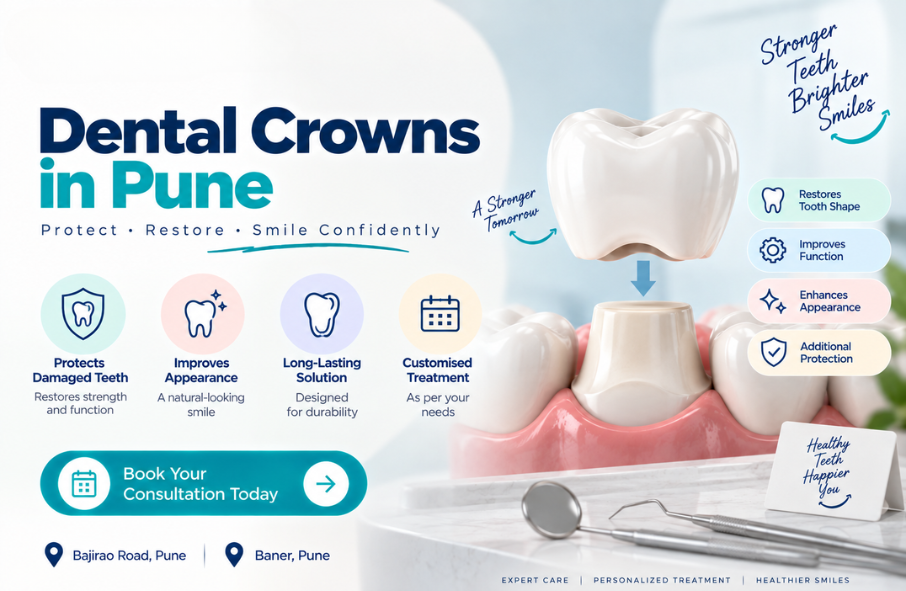
A damaged, weakened or heavily restored tooth may need additional protection to restore its appearance and function. A dental crown is one treatment option that can cover and protect a damaged tooth.
Dental crowns, sometimes called dental caps, are designed to fit over a prepared tooth or appropriate dental restoration.
If you are searching for dental crowns in Pune, understanding the different types, procedure, cost factors and situations in which a crown may be recommended can help you make an informed decision.
What Is a Dental Crown?
A dental crown is a custom-made restoration designed to cover a tooth.
It can be used when a tooth has been significantly weakened, damaged or treated and requires additional structural protection.
A crown can help restore:
- Tooth shape
- Tooth function
- Appearance
- Strength of the remaining tooth structure
The type of crown recommended depends on the location of the tooth, its condition, functional requirements and aesthetic considerations.
When Do You Need a Dental Crown?
A dentist may recommend a crown in several situations.
After Root Canal Treatment
A tooth that has undergone root canal treatment may have lost a significant amount of tooth structure.
Depending on the tooth and remaining structure, a crown may be recommended to provide additional protection.
A Heavily Damaged Tooth
A tooth with substantial damage or a large existing restoration may require a crown when a conventional filling is not sufficient.
Cracked or Weakened Teeth
A crown may sometimes be considered for a structurally compromised tooth, depending on the extent and location of the damage.
Cosmetic Improvement
In selected situations, crowns may be used to improve the appearance of a tooth.
However, cosmetic treatment should begin with an assessment of the tooth and available alternatives.
Types of Dental Crowns
Different crown materials are available, and each has its own characteristics.
1. Ceramic Crowns
Ceramic crowns can provide a tooth-coloured appearance and may be considered when aesthetics are an important priority.
They can be suitable for selected teeth depending on the patient’s requirements.
2. Zirconia Crowns
Zirconia is a strong ceramic material used in various dental restorations.
Zirconia crowns may be considered for both aesthetic and functional applications depending on the tooth and treatment plan.
3. Metal Crowns
Metal-based crowns have traditionally been used in dentistry because of their strength and durability.
However, their appearance may make them less desirable for highly visible teeth.
4. Porcelain-Fused-to-Metal Crowns
These crowns combine a metal structure with a tooth-coloured outer layer.
They can provide a combination of strength and aesthetics, depending on the design and clinical situation.
Your dentist can recommend the most suitable material after examining your tooth.
Dental Crown Procedure: Step by Step
The exact procedure depends on the condition of your tooth and the type of restoration selected.
Step 1: Dental Examination
Your dentist examines the tooth and surrounding tissues.
The assessment may include dental imaging when required.
Step 2: Treatment Planning
Your dentist determines whether a crown is appropriate and discusses the available material options.
Factors such as tooth location, bite and remaining tooth structure are considered.
Step 3: Tooth Preparation
The tooth is prepared so that the crown can fit appropriately.
The amount of preparation depends on the type of crown and the condition of the tooth.
Step 4: Impression or Digital Scan
Your dentist may take an impression or use digital scanning to capture the shape of the prepared tooth and surrounding structures.
Step 5: Temporary Restoration
Depending on the treatment, a temporary crown may be placed while the final restoration is being prepared.
Step 6: Final Crown Placement
Once the final crown is ready, your dentist checks its fit, appearance and bite.
If everything is appropriate, the crown is placed and secured.
Is Getting a Dental Crown Painful?
The procedure is generally performed using appropriate local anaesthesia when necessary.
You may experience pressure or sensitivity during different stages of treatment.
After the procedure, some patients may experience temporary sensitivity or mild discomfort.
If discomfort is severe, persistent or unexpected, contact your dentist for an assessment.
How Much Do Dental Crowns Cost in Pune?
The dental crown cost in Pune varies depending on several factors.
These can include:
- Crown material
- Tooth location
- Condition of the tooth
- Amount of preparation required
- Diagnostic requirements
- Whether root canal treatment is needed
- Laboratory and fabrication requirements
- Complexity of the case
For this reason, there is no single crown price that applies to every patient.
A dental consultation can help you understand which crown is appropriate and what the complete treatment cost will be.
Is the Root Canal Included in the Crown Cost?
Not necessarily.
Root canal treatment and crown placement are separate dental procedures.
If a tooth requires RCT before receiving a crown, the overall treatment cost may include both procedures.
Similarly, diagnostic tests, temporary restorations and other treatments may have separate costs.
Ask your dentist for a complete treatment estimate before starting.
How Long Does a Dental Crown Take?
The treatment timeline varies depending on the type of crown, laboratory requirements and condition of the tooth.
A typical process may involve:
- Examination
- Tooth preparation
- Impression or digital scan
- Temporary restoration, when required
- Final crown placement
Some cases may require additional appointments.
Your dentist can provide a more accurate timeline based on your treatment plan.
How Long Do Dental Crowns Last?
The lifespan of a dental crown is not identical for every patient.
It can be affected by:
- Oral hygiene
- Gum health
- Bite forces
- Teeth grinding
- Crown material
- Tooth condition
- Regular dental care
- Lifestyle habits
A crown should be cared for like your natural teeth, with regular oral hygiene and professional dental check-ups.
How Do You Take Care of a Dental Crown?
Good oral hygiene is important after crown placement.
You should:
- Brush regularly
- Clean between your teeth
- Maintain gum health
- Attend regular dental examinations
- Follow your dentist’s recommendations
- Avoid using teeth to open hard objects or packages
If you grind or clench your teeth, tell your dentist because excessive forces may affect dental restorations.
Can a Dental Crown Get a Cavity?
A dental crown itself does not develop tooth decay in the same way as natural tooth structure.
However, the natural tooth underneath and around the crown can still be affected by decay if oral hygiene is inadequate.
This is why cleaning around a crowned tooth and maintaining healthy gums remain important.
What If a Dental Crown Feels Loose?
A loose crown should be evaluated by a dentist.
Possible reasons can include:
- Wear or damage
- Problems with the underlying tooth
- Changes in the supporting structure
- Cement or bonding issues
- Excessive biting forces
Do not try to permanently fix a loose crown yourself.
Contact your dentist so the restoration and underlying tooth can be assessed.
Are Dental Crowns Only Used for Damaged Teeth?
No.
Crowns can have several applications in restorative dentistry.
They may be used to:
- Protect weakened teeth
- Restore damaged teeth
- Cover certain teeth after root canal treatment
- Restore teeth with significant loss of structure
- Support certain dental bridge designs
- Improve the appearance of selected teeth
The appropriate use depends on the individual dental condition.
Dental Crown vs Dental Filling
A filling is generally used to restore a tooth when there is enough healthy tooth structure remaining to support it.
A crown covers a larger portion of the tooth and may be considered when the tooth requires greater structural protection.
Your dentist can determine whether a filling, crown or another restoration is appropriate.
Dental Crown vs Dental Veneer
Crowns and veneers are different treatments.
A veneer generally covers the front surface of a tooth, while a crown covers the tooth more extensively.
Veneers are commonly considered for selected cosmetic concerns, whereas crowns can be used for both restorative and cosmetic purposes.
The right treatment depends on the condition and goals for the tooth.
How to Choose the Right Dental Crown?
Choosing a crown should involve more than simply selecting the cheapest material.
Your dentist may consider:
- Tooth location
- Bite
- Amount of remaining tooth structure
- Aesthetic requirements
- Functional demands
- Gum health
- Existing dental work
- Long-term treatment goals
Discuss the advantages and limitations of the available materials with your dentist before making a decision.
Dental Crowns in Pune at Dental Galaxy
If you are looking for dental crowns in Pune, a professional examination can help determine whether a crown is appropriate for your tooth.
Dental Galaxy is a multi-speciality dental clinic in Pune with locations listed at Bajirao Road and Baner.
Patients can consult professional dental doctors about damaged, weakened or previously treated teeth and discuss suitable restorative options.
Your dentist can explain the recommended crown type, treatment stages, expected timeline and associated costs based on your individual case.
Final Thoughts
A dental crown can help restore and protect a damaged or weakened tooth when a crown is clinically appropriate.
The type of crown, treatment process and overall cost depend on factors such as the tooth’s condition, location, restoration material and additional treatment requirements.
If you have a damaged tooth or have recently undergone root canal treatment, don’t assume that the same crown option is suitable for everyone.
A dental examination can help determine whether you need a crown and which restoration is appropriate for your situation.
For patients searching for dental crowns in Pune, Dental Galaxy can provide professional consultation and help you understand your restorative treatment options.