If you are considering dental implants to replace a missing tooth, one of the most common questions is how long dental implants last.
Dental implants are designed as a long-term tooth-replacement option, but their longevity is not the same for every patient. Oral hygiene, gum health, bite forces, lifestyle habits, the quality of treatment and regular dental care can all influence how well an implant and its restoration perform over time.
Understanding these factors can help you take better care of your implant and make informed decisions about your treatment.
What Is the Lifespan of a Dental Implant?
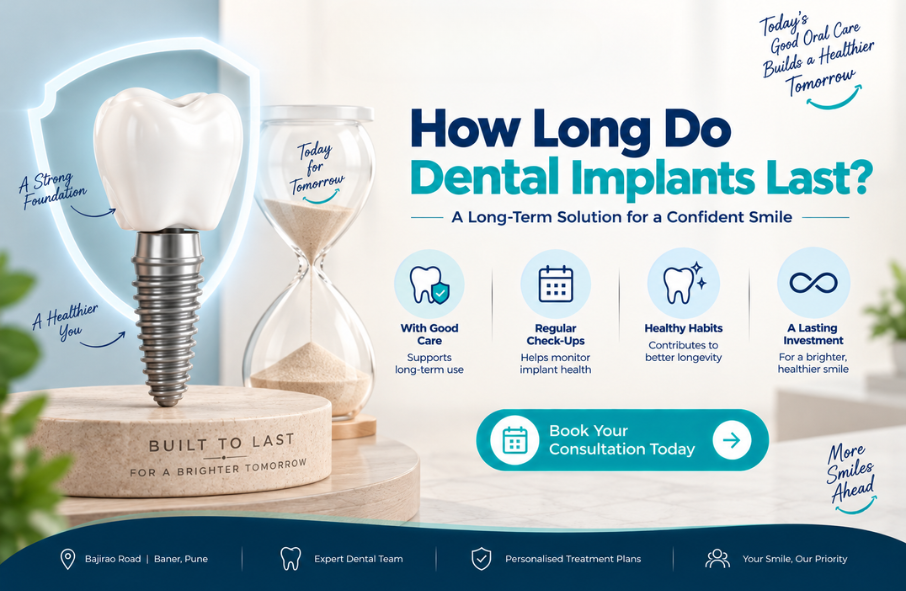
Dental implants are designed to provide a long-term foundation for replacement teeth.
However, there is no guaranteed lifespan that applies to every implant.
The long-term success of treatment can depend on:
- Oral hygiene
- Gum health
- Bone condition
- Bite and chewing forces
- Smoking or tobacco use
- Quality of implant treatment
- Condition of the final restoration
- Regular dental check-ups
- Individual health and healing
The implant itself and the visible crown are also different components, and they may not have the same maintenance or replacement requirements.
Do Dental Implants Last Forever?
No dental treatment should be considered permanently maintenance-free.
Although dental implants are intended for long-term use, their performance can be affected by oral health, mechanical forces and other factors.
The crown or other final restoration may eventually require repair or replacement due to normal wear or damage.
Regular professional monitoring helps your dentist assess both the implant and restoration over time.
What Factors Affect Dental Implant Longevity?
1. Oral Hygiene
Good oral hygiene is one of the most important parts of maintaining an implant.
Plaque can accumulate around dental implants just as it can around natural teeth.
Maintaining appropriate brushing and cleaning around the implant can help support gum health.
Your dentist can recommend the most suitable cleaning technique for your specific restoration.
2. Gum Health
Healthy gums are important for maintaining the tissues surrounding an implant.
Inflammation or infection around an implant can affect the tissues supporting it.
This is why regular dental examinations are useful even after the final crown has been placed.
If you notice bleeding, swelling or other unusual changes around an implant, contact your dentist for an evaluation.
3. Smoking and Tobacco
Smoking and tobacco use can negatively affect oral health and may interfere with healing and long-term implant care.
If you smoke or use tobacco, discuss this with your dentist before and after implant treatment.
Your dental professional can explain how it may affect your individual treatment.
4. Bite and Chewing Forces
The amount of force placed on an implant restoration can influence its long-term condition.
Teeth grinding or clenching may place additional stress on dental restorations.
If you regularly grind or clench your teeth, tell your dentist. They can evaluate your bite and discuss appropriate options if necessary.
5. Quality of Treatment and Planning
Careful treatment planning is important for implant therapy.
Your dentist may evaluate:
- Bone availability
- Gum health
- Implant position
- Bite
- Surrounding teeth
- Overall oral health
Appropriate planning helps determine the most suitable implant and restoration approach for your individual case.
6. Regular Dental Check-Ups
Dental implants still require professional monitoring.
During regular visits, your dentist can assess:
- Implant stability
- Gum condition
- Surrounding tissues
- Crown or restoration
- Bite
- Oral hygiene
Regular appointments can help identify potential issues before they become more significant.
How Can You Make Dental Implants Last Longer?
Although no treatment comes with a guarantee of a particular lifespan, good habits can support long-term implant health.
Maintain Good Oral Hygiene
Brush your teeth regularly and clean around the implant and restoration according to your dentist’s instructions.
Attend Regular Dental Visits
Professional examinations allow your dentist to monitor your implant and surrounding tissues.
Avoid Tobacco
Reducing or avoiding tobacco can support better oral health and implant care.
Protect Your Teeth
Avoid using your teeth to bite extremely hard objects or open packages.
Manage Teeth Grinding
If you clench or grind your teeth, discuss it with your dentist.
Follow Your Dentist’s Instructions
Your dentist knows the details of your implant and restoration and can provide personalised maintenance advice.
Can a Dental Implant Fail?
Although dental implants can be successful long-term tooth replacements, complications can occur.
Problems may involve the implant, surrounding tissues or the restoration.
Potential concerns can include:
- Infection or inflammation around the implant
- Problems with supporting bone or tissues
- Implant instability
- Damage or wear to the restoration
- Bite-related stress
Early assessment is important if something feels unusual.
Signs such as persistent discomfort, swelling, bleeding or movement of the implant or restoration should be discussed with your dentist.
Does the Dental Crown Last as Long as the Implant?
Not necessarily.
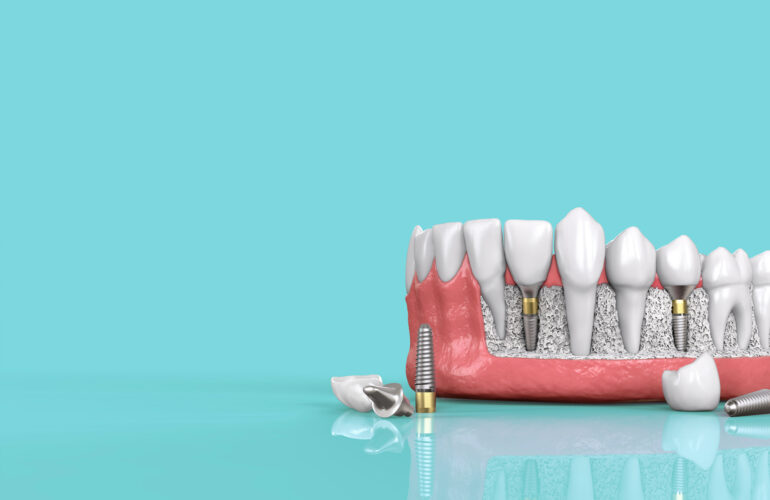
A dental implant and its crown are separate components.
The implant is placed into the jawbone, while the crown is the visible replacement tooth attached to the implant.
The crown is exposed to everyday chewing forces and can experience wear or damage over time.
If the crown needs replacement, that does not automatically mean the dental implant itself has failed.
Your dentist can examine the restoration and determine what treatment is required.
Can a Dental Implant Be Replaced?
If an implant develops a significant problem, your dentist will need to assess the cause and condition of the surrounding tissues.
Depending on the situation, treatment may involve addressing the underlying problem, repairing or replacing the restoration, or considering further implant treatment.
Whether an implant can be replaced depends on the individual clinical circumstances.
A professional examination is necessary before deciding on the appropriate approach.
What Happens If You Don’t Maintain a Dental Implant?
A dental implant does not eliminate the need for oral hygiene.
Poor oral hygiene can contribute to problems involving the gums and tissues around an implant.
Similarly, failing to attend dental check-ups can mean potential problems are not identified early.
Treat an implant as part of your overall oral health—not as a tooth replacement that requires no maintenance.
How Often Should Dental Implants Be Checked?
Your dentist will recommend a follow-up schedule based on your oral health and implant treatment.
Routine dental appointments allow your dental team to monitor the implant, restoration and surrounding tissues.
The frequency of visits can vary between patients.
If you experience symptoms between appointments, don’t wait for your next scheduled check-up—contact your dentist.
Are Dental Implants Worth It for Long-Term Tooth Replacement?
Dental implants can be an effective option for replacing missing teeth when a patient is suitable for implant treatment.
Potential benefits include:
- A fixed tooth-replacement option
- A natural-looking restoration
- Restoration of chewing function
- Independent replacement of an individual missing tooth
- A long-term treatment approach
However, suitability varies from patient to patient.
A dentist should assess your oral health, gums, jawbone and treatment goals before recommending an implant.
Dental Implant Longevity in Pune
If you are considering dental implants in Pune, choosing appropriate treatment and maintaining the implant afterwards are both important.
Dental Galaxy is a multi-speciality dental clinic in Pune with locations listed at Bajirao Road and Baner.
Patients can consult professional dental doctors to discuss missing teeth, implant suitability, treatment planning and long-term implant care.
Your dentist can also explain the expected maintenance requirements for your specific implant and restoration.
Final Thoughts
So, how long do dental implants last?
Dental implants are designed to be a long-term tooth-replacement solution, but their longevity depends on many factors. Good oral hygiene, healthy gums, appropriate treatment planning, regular dental visits and responsible lifestyle habits can all contribute to maintaining an implant over time.
The visible crown may require maintenance or replacement independently of the implant.
If you have a dental implant or are considering one, regular professional care is an important part of protecting your investment in your oral health.
For patients looking for dental implants in Pune, Dental Galaxy can provide professional dental consultation and help you understand your implant treatment, restoration and long-term care requirements.