Dental

How Long Do Dental Implants Last? Lifespan, Care & Maintenance

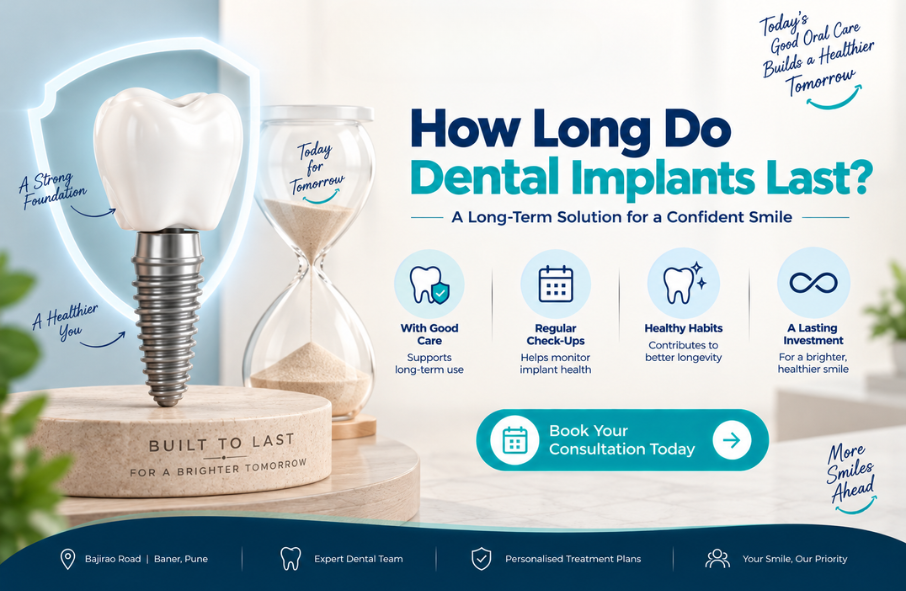
If you are considering dental implants to replace a missing tooth, one of the most common questions is how long dental implants last.

Dental implants are designed as a long-term tooth-replacement option, but their longevity is not the same for every patient. Oral hygiene, gum health, bite forces, lifestyle habits, the quality of treatment and regular dental care can all influence how well an implant and its restoration perform over time.

Understanding these factors can help you take better care of your implant and make informed decisions about your treatment.


What Is the Lifespan of a Dental Implant?

Dental implants are designed to provide a long-term foundation for replacement teeth.

However, there is no guaranteed lifespan that applies to every implant.

The long-term success of treatment can depend on:

  • Oral hygiene
  • Gum health
  • Bone condition
  • Bite and chewing forces
  • Smoking or tobacco use
  • Quality of implant treatment
  • Condition of the final restoration
  • Regular dental check-ups
  • Individual health and healing

The implant itself and the visible crown are also different components, and they may not have the same maintenance or replacement requirements.


Do Dental Implants Last Forever?

No dental treatment should be considered permanently maintenance-free.

Although dental implants are intended for long-term use, their performance can be affected by oral health, mechanical forces and other factors.

The crown or other final restoration may eventually require repair or replacement due to normal wear or damage.

Regular professional monitoring helps your dentist assess both the implant and restoration over time.


What Factors Affect Dental Implant Longevity?

1. Oral Hygiene

Good oral hygiene is one of the most important parts of maintaining an implant.

Plaque can accumulate around dental implants just as it can around natural teeth.

Maintaining appropriate brushing and cleaning around the implant can help support gum health.

Your dentist can recommend the most suitable cleaning technique for your specific restoration.


2. Gum Health

Healthy gums are important for maintaining the tissues surrounding an implant.

Inflammation or infection around an implant can affect the tissues supporting it.

This is why regular dental examinations are useful even after the final crown has been placed.

If you notice bleeding, swelling or other unusual changes around an implant, contact your dentist for an evaluation.


3. Smoking and Tobacco

Smoking and tobacco use can negatively affect oral health and may interfere with healing and long-term implant care.

If you smoke or use tobacco, discuss this with your dentist before and after implant treatment.

Your dental professional can explain how it may affect your individual treatment.


4. Bite and Chewing Forces

The amount of force placed on an implant restoration can influence its long-term condition.

Teeth grinding or clenching may place additional stress on dental restorations.

If you regularly grind or clench your teeth, tell your dentist. They can evaluate your bite and discuss appropriate options if necessary.


5. Quality of Treatment and Planning

Careful treatment planning is important for implant therapy.

Your dentist may evaluate:

  • Bone availability
  • Gum health
  • Implant position
  • Bite
  • Surrounding teeth
  • Overall oral health

Appropriate planning helps determine the most suitable implant and restoration approach for your individual case.


6. Regular Dental Check-Ups

Dental implants still require professional monitoring.

During regular visits, your dentist can assess:

  • Implant stability
  • Gum condition
  • Surrounding tissues
  • Crown or restoration
  • Bite
  • Oral hygiene

Regular appointments can help identify potential issues before they become more significant.


How Can You Make Dental Implants Last Longer?

Although no treatment comes with a guarantee of a particular lifespan, good habits can support long-term implant health.

Maintain Good Oral Hygiene

Brush your teeth regularly and clean around the implant and restoration according to your dentist’s instructions.

Attend Regular Dental Visits

Professional examinations allow your dentist to monitor your implant and surrounding tissues.

Avoid Tobacco

Reducing or avoiding tobacco can support better oral health and implant care.

Protect Your Teeth

Avoid using your teeth to bite extremely hard objects or open packages.

Manage Teeth Grinding

If you clench or grind your teeth, discuss it with your dentist.

Follow Your Dentist’s Instructions

Your dentist knows the details of your implant and restoration and can provide personalised maintenance advice.


Can a Dental Implant Fail?

Although dental implants can be successful long-term tooth replacements, complications can occur.

Problems may involve the implant, surrounding tissues or the restoration.

Potential concerns can include:

  • Infection or inflammation around the implant
  • Problems with supporting bone or tissues
  • Implant instability
  • Damage or wear to the restoration
  • Bite-related stress

Early assessment is important if something feels unusual.

Signs such as persistent discomfort, swelling, bleeding or movement of the implant or restoration should be discussed with your dentist.


Does the Dental Crown Last as Long as the Implant?

Not necessarily.

A dental implant and its crown are separate components.

The implant is placed into the jawbone, while the crown is the visible replacement tooth attached to the implant.

The crown is exposed to everyday chewing forces and can experience wear or damage over time.

If the crown needs replacement, that does not automatically mean the dental implant itself has failed.

Your dentist can examine the restoration and determine what treatment is required.


Can a Dental Implant Be Replaced?

If an implant develops a significant problem, your dentist will need to assess the cause and condition of the surrounding tissues.

Depending on the situation, treatment may involve addressing the underlying problem, repairing or replacing the restoration, or considering further implant treatment.

Whether an implant can be replaced depends on the individual clinical circumstances.

A professional examination is necessary before deciding on the appropriate approach.


What Happens If You Don’t Maintain a Dental Implant?

A dental implant does not eliminate the need for oral hygiene.

Poor oral hygiene can contribute to problems involving the gums and tissues around an implant.

Similarly, failing to attend dental check-ups can mean potential problems are not identified early.

Treat an implant as part of your overall oral health—not as a tooth replacement that requires no maintenance.


How Often Should Dental Implants Be Checked?

Your dentist will recommend a follow-up schedule based on your oral health and implant treatment.

Routine dental appointments allow your dental team to monitor the implant, restoration and surrounding tissues.

The frequency of visits can vary between patients.

If you experience symptoms between appointments, don’t wait for your next scheduled check-up—contact your dentist.


Are Dental Implants Worth It for Long-Term Tooth Replacement?

Dental implants can be an effective option for replacing missing teeth when a patient is suitable for implant treatment.

Potential benefits include:

  • A fixed tooth-replacement option
  • A natural-looking restoration
  • Restoration of chewing function
  • Independent replacement of an individual missing tooth
  • A long-term treatment approach

However, suitability varies from patient to patient.

A dentist should assess your oral health, gums, jawbone and treatment goals before recommending an implant.


Dental Implant Longevity in Pune

If you are considering dental implants in Pune, choosing appropriate treatment and maintaining the implant afterwards are both important.

Dental Galaxy is a multi-speciality dental clinic in Pune with locations listed at Bajirao Road and Baner.

Patients can consult professional dental doctors to discuss missing teeth, implant suitability, treatment planning and long-term implant care.

Your dentist can also explain the expected maintenance requirements for your specific implant and restoration.


Final Thoughts

So, how long do dental implants last?

Dental implants are designed to be a long-term tooth-replacement solution, but their longevity depends on many factors. Good oral hygiene, healthy gums, appropriate treatment planning, regular dental visits and responsible lifestyle habits can all contribute to maintaining an implant over time.

The visible crown may require maintenance or replacement independently of the implant.

If you have a dental implant or are considering one, regular professional care is an important part of protecting your investment in your oral health.

For patients looking for dental implants in Pune, Dental Galaxy can provide professional dental consultation and help you understand your implant treatment, restoration and long-term care requirements.
Dental

Dental Implant Recovery & Aftercare: What to Expect After Implant Surgery

If you are planning or have recently undergone dental implant surgery, knowing what to expect during dental implant recovery can help you prepare for the healing period.

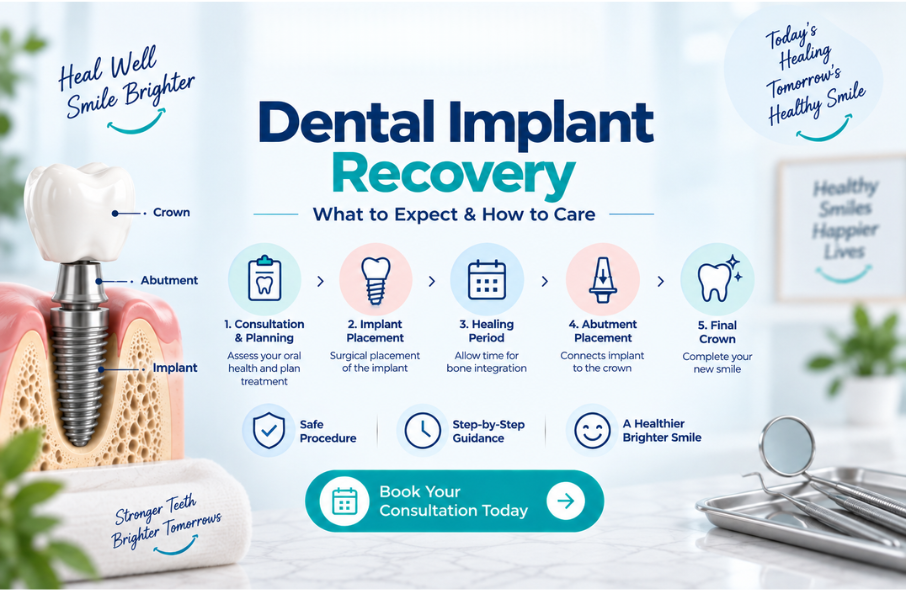
Dental implant treatment generally involves placing an implant into the jawbone, followed by a healing period before the final restoration is completed.

Recovery is different for every patient. Factors such as the number and location of implants, the condition of the gums and jawbone, additional procedures and individual healing response can influence the recovery process.

Here’s what you should know about recovery and aftercare following dental implant surgery.


What Happens During Dental Implant Recovery?

After an implant is placed, the surrounding tissues need time to heal.

The implant also needs to integrate with the surrounding jawbone before the final restoration is completed.

During recovery, you may experience temporary symptoms such as:

  • Mild discomfort
  • Tenderness
  • Swelling
  • Minor bleeding
  • Sensitivity around the treatment area

These symptoms can vary depending on the procedure and individual healing response.

Your dentist will provide specific instructions based on your treatment.


Dental Implant Recovery Time: How Long Does It Take?

There is no single recovery timeline that applies to every patient.

The healing period can depend on:

  • Number of implants
  • Location of the implant
  • Bone quality and quantity
  • Gum health
  • Whether bone grafting or another procedure was performed
  • Individual healing response
  • Overall treatment plan

The surgical site may begin healing soon after the procedure, but complete implant treatment takes longer because the implant needs time to integrate with the jawbone.

Your dentist will monitor the healing process and determine when you are ready for the next stage.


What to Expect Immediately After Implant Surgery

During the first few days, the treatment area may feel tender or swollen.

Your dental professional may provide instructions regarding:

  • Food and drinks
  • Oral hygiene
  • Medication
  • Physical activity
  • Care of the surgical site
  • Follow-up appointments

Follow these instructions carefully rather than relying on generic online advice.

If your dentist gives you instructions that differ from general recommendations, follow the instructions provided for your specific procedure.


Dental Implant Aftercare: Important Tips

1. Follow Your Dentist’s Instructions

The most important part of dental implant aftercare is following the instructions provided by your dental professional.

These instructions are based on the procedure you received and your individual oral health.

Do not change prescribed medication or treatment instructions without consulting your dentist.

2. Keep the Area Clean

Maintaining appropriate oral hygiene is important during recovery.

However, the surgical area may require special care immediately after treatment.

Your dentist can explain when and how to clean around the implant site.

Avoid unnecessarily disturbing the healing area.

3. Choose Appropriate Foods

Your dentist may recommend softer foods during the initial recovery period.

Depending on your treatment, suitable options may include foods that are easy to chew and less likely to irritate the surgical area.

As healing progresses, your dentist can advise you when to return to your usual diet.

4. Avoid Smoking and Tobacco

Smoking and tobacco use can negatively affect oral health and may interfere with healing.

If you are undergoing implant treatment, discuss tobacco use openly with your dental professional and follow their recommendations during recovery.

5. Attend Follow-Up Appointments

Follow-up appointments allow your dentist to assess healing and monitor the implant.

These visits are an important part of the overall treatment process.

Your dentist can determine whether healing is progressing appropriately and when the next stage of treatment can begin.


Can You Brush After Dental Implant Surgery?

Oral hygiene remains important after implant treatment, but the surgical area may need special care immediately following surgery.

Your dentist will tell you:

  • When to resume brushing near the treatment site
  • How to clean the surrounding teeth
  • Whether any additional cleaning method is required
  • When normal brushing can resume

Do not aggressively brush or disturb the surgical site during the early healing period.


What Can You Eat After Dental Implant Surgery?

Dietary recommendations can vary according to the procedure.

Initially, your dentist may recommend foods that are soft and easy to chew.

Examples can include:

  • Soft cooked foods
  • Smooth foods
  • Soups at an appropriate temperature
  • Yogurt
  • Other foods recommended by your dental professional

Avoid foods that are excessively hard, crunchy or difficult to chew if they could disturb the treatment area.

Your dentist will let you know when you can gradually return to your regular diet.


Is Swelling Normal After Dental Implant Surgery?

Some swelling can occur following oral surgery.

The amount and duration can vary depending on the extent of treatment and individual response.

Following your dentist’s post-operative instructions can help support recovery.

However, if swelling becomes unusually severe, continues to worsen or is accompanied by other concerning symptoms, contact your dental professional.


How to Manage Discomfort During Implant Recovery

Some discomfort is possible after implant placement.

Your dentist may recommend appropriate pain-management measures based on your medical and dental history.

Take medication only as directed by your dental professional.

You should also avoid putting unnecessary pressure on the implant site while it is healing.

If pain is severe, persistent or unexpectedly increases, contact your dentist rather than attempting to manage the problem yourself.


When Can You Return to Normal Activities?

The appropriate time to return to normal activities depends on the procedure performed and your individual recovery.

For a straightforward procedure, your dentist may provide relatively simple activity instructions.

More extensive treatment may require additional precautions.

Always follow the specific activity restrictions provided by your dental professional.


Can You Exercise After Dental Implant Surgery?

You may need to temporarily modify strenuous physical activity after implant surgery.

The appropriate timeframe depends on the extent of the procedure and your recovery.

Ask your dentist when it is appropriate to resume:

  • Gym workouts
  • Running
  • Heavy lifting
  • Sports
  • Other strenuous activities

Following personalised instructions can help avoid unnecessary stress during the early healing period.


What Happens After the Implant Heals?

Once the implant has healed sufficiently and your dentist determines that it is ready, treatment can progress to the restoration stage.

Depending on your treatment plan, this may involve:

  1. Abutment placement
  2. Impression or digital scanning
  3. Fabrication of the final restoration
  4. Crown placement
  5. Bite and fit adjustments

The final restoration replaces the visible portion of the missing tooth.


Signs You Should Contact Your Dentist

Although some discomfort and swelling may occur after surgery, contact your dental professional if you experience symptoms that concern you.

These may include:

  • Severe or worsening pain
  • Significant swelling
  • Persistent bleeding
  • Unusual discharge
  • Fever or feeling unwell
  • Problems with the implant or restoration
  • Symptoms that do not improve as expected

Your dentist can determine whether further assessment or treatment is necessary.


How Can You Support Dental Implant Healing?

Good oral care is an important part of implant treatment.

You can support your recovery by:

  • Following your dentist’s instructions
  • Maintaining appropriate oral hygiene
  • Avoiding tobacco
  • Eating according to post-operative recommendations
  • Attending follow-up appointments
  • Protecting the treatment area
  • Reporting unusual symptoms promptly

Long-term maintenance is also important once the final restoration has been placed.


Does Dental Implant Recovery Take Longer With Bone Grafting?

If bone grafting or another additional procedure is required, the treatment timeline may be longer.

This is because the additional procedure may require its own healing period before or alongside implant treatment.

Not every implant patient needs bone grafting.

Your dentist can determine whether additional bone support is necessary after evaluating the implant site.


Dental Implant Recovery in Pune

If you are planning dental implant treatment in Pune, discuss the expected recovery process with your dental professional before beginning treatment.

Dental Galaxy is a multi-speciality dental clinic in Pune with locations listed at Bajirao Road and Baner.

Patients can consult professional dental doctors regarding missing teeth, implant suitability, treatment stages and post-treatment care.

A personalised treatment plan can help you understand what to expect before, during and after implant placement.


Final Thoughts

Dental implant recovery is an important part of successful implant treatment.

While some tenderness, swelling or discomfort may occur after surgery, the overall healing process varies from patient to patient.

The implant requires time to heal and integrate with the surrounding jawbone before the final restoration can be completed.

Following your dentist’s aftercare instructions, maintaining good oral hygiene, avoiding tobacco and attending follow-up appointments can help support the recovery process.

If you are considering dental implants in Pune, consult a qualified dental professional to understand your treatment plan, expected healing period and aftercare requirements.

Dental

Dental Implant Procedure Step-by-Step: What Happens During Treatment?

If you have a missing tooth and are considering dental implants, understanding the dental implant procedure can make the treatment process easier to understand.

Unlike a conventional dental filling or crown, implant treatment generally involves several stages. These may include an initial dental examination, treatment planning, implant placement, a healing period and placement of the final tooth restoration.

The exact process and timeline vary depending on your oral health, the location of the missing tooth and whether additional treatment is required.

Here is what you can generally expect during dental implant treatment.

What Is a Dental Implant?

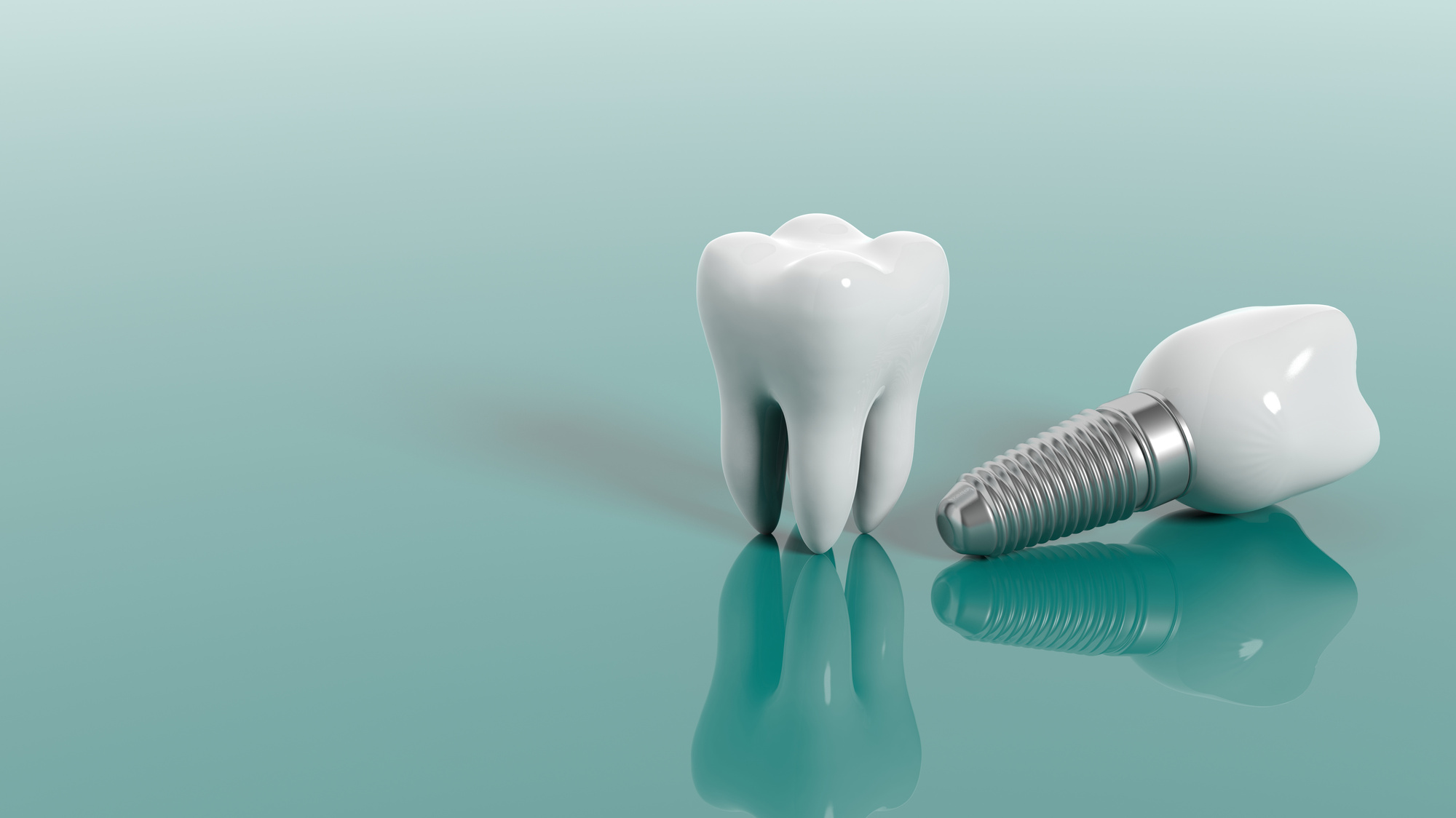
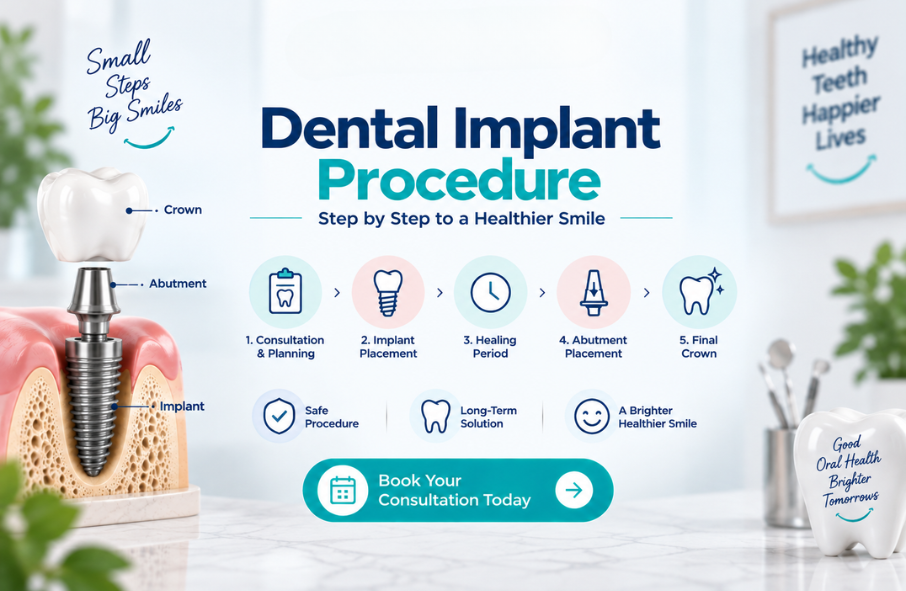
A dental implant is a tooth-replacement solution designed to support a dental restoration.

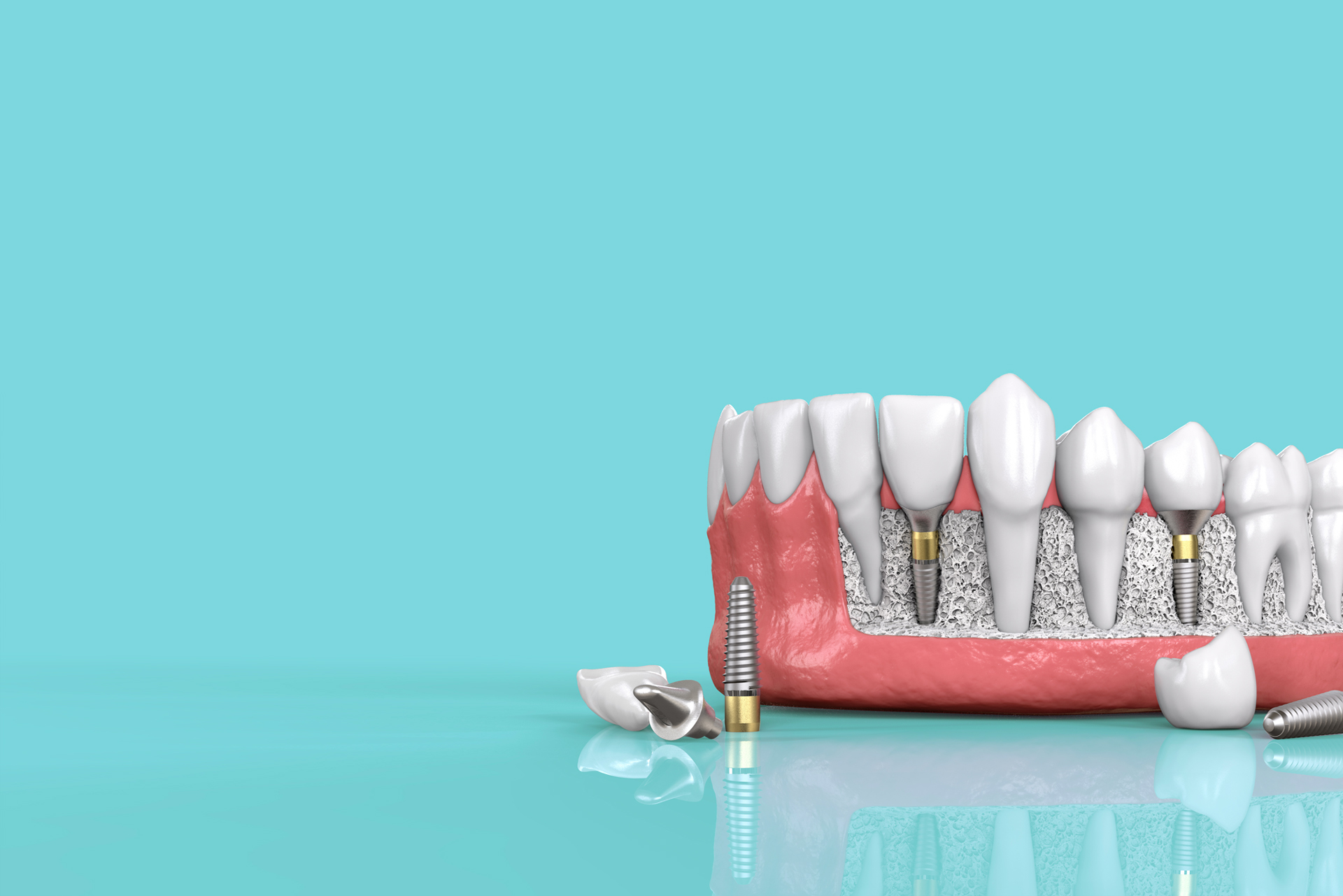
A typical implant-supported tooth consists of:

  • Dental implant – placed in the jawbone
  • Abutment – connects the implant to the restoration
  • Dental crown – replaces the visible portion of the missing tooth

The implant provides a foundation for the replacement tooth.


Dental Implant Procedure: Step-by-Step

Step 1: Initial Dental Consultation

The first stage is an examination with your dentist.

Your dentist will assess:

  • The missing tooth or teeth
  • Surrounding teeth
  • Gum health
  • Jawbone condition
  • Bite and overall oral health
  • Your treatment expectations

Your dental history and existing oral conditions may also be considered.

This assessment helps determine whether dental implants are an appropriate option for you.

Step 2: Diagnostic Evaluation and Treatment Planning

Dental implant treatment requires careful planning.

Depending on your case, your dentist may recommend dental imaging to evaluate the implant site and surrounding structures.

The treatment plan may consider:

  • Implant position
  • Number of implants
  • Type of restoration
  • Available bone
  • Gum condition
  • Need for additional procedures

Your dentist can also explain the expected treatment stages, timeline and costs before treatment begins.

Step 3: Preparing the Mouth for Implant Treatment

Not every patient can proceed directly to implant placement.

If problems such as untreated dental disease or gum problems are present, they may need to be addressed first.

Some patients may also require additional procedures if there is insufficient bone at the planned implant site.

The preparation required depends entirely on the individual’s dental condition.

Step 4: Dental Implant Placement

Once the site is ready, the dental implant can be surgically placed into the jawbone.

The procedure is performed using appropriate local anaesthesia or other pain-management methods as determined by the dental professional.

The implant is positioned carefully according to the treatment plan.

After placement, the area needs time to heal.

Step 5: Healing and Implant Integration

After the implant is placed, a healing period is required.

During this stage, the implant integrates with the surrounding jawbone.

The length of healing varies from patient to patient and depends on factors such as:

  • Implant location
  • Bone condition
  • Overall oral health
  • Individual healing response
  • Whether additional procedures were performed

Your dentist will determine when the implant is ready for the next stage of treatment.

Step 6: Abutment Placement

Once the implant has sufficiently healed, the next stage involves connecting the implant to the final restoration.

An abutment serves as the connection between the dental implant and crown or other restoration.

The timing and method of abutment placement depend on the treatment approach used for your case.

Step 7: Crown or Final Restoration

The final restoration is the part designed to replace the visible missing tooth.

For a single missing tooth, this is commonly a dental crown.

The restoration is planned to fit the implant and work with the surrounding teeth.

Your dentist and dental laboratory consider factors such as:

  • Tooth shape
  • Tooth colour
  • Size
  • Position
  • Bite
  • Overall smile appearance

The final goal is to provide a functional and natural-looking tooth replacement.


How Long Does the Dental Implant Procedure Take?

Dental implant treatment is not necessarily completed in a single appointment.

The overall timeline can depend on:

  • Number of missing teeth
  • Implant location
  • Bone condition
  • Gum health
  • Need for additional treatment
  • Healing response
  • Type of restoration

The surgical implant placement itself may be completed during one appointment, but the complete treatment includes subsequent healing and restoration stages.

Your dentist can provide a more specific timeline after evaluating your case.


Is Dental Implant Surgery Painful?

Pain and discomfort vary from person to person.

During implant placement, appropriate anaesthesia is used to help manage discomfort.

After treatment, some patients may experience temporary:

  • Tenderness
  • Swelling
  • Mild discomfort
  • Sensitivity around the treatment area

Your dentist will provide appropriate post-treatment instructions and explain how to care for the area during recovery.

If you experience unexpected or severe symptoms, contact your dental professional promptly.


What Should You Do After Dental Implant Placement?

Following your dentist’s aftercare instructions is important for recovery.

Depending on your treatment, you may be advised to:

  • Maintain appropriate oral hygiene
  • Follow dietary instructions
  • Avoid disturbing the surgical area
  • Attend scheduled follow-up appointments
  • Take prescribed medication as directed
  • Avoid smoking or tobacco products

Your dentist will provide instructions specific to your procedure.


Can You Get a Temporary Tooth During Implant Treatment?

In some situations, a temporary tooth replacement may be considered while the implant is healing.

Whether this is appropriate depends on factors such as:

  • Implant location
  • Treatment plan
  • Stability of the implant
  • Type of restoration
  • Your dentist’s clinical assessment

Ask your dentist what temporary replacement options are suitable for your case.


What Happens If You Need Bone Grafting?

Some patients may have insufficient bone at the planned implant site.

In such situations, your dentist may discuss a bone-grafting procedure or another appropriate treatment approach.

This can add an additional stage to the treatment and may affect the overall healing timeline.

However, not everyone who receives a dental implant requires bone grafting.

The need can only be determined after appropriate examination and imaging.


How Many Appointments Are Needed for Dental Implants?

The number of appointments varies.

A typical treatment may involve appointments for:

  1. Initial consultation
  2. Diagnostic evaluation
  3. Implant placement
  4. Follow-up during healing
  5. Abutment/restoration stage
  6. Final crown placement

Additional appointments may be required if other dental procedures are necessary.


What Happens After the Final Crown Is Placed?

Once your final restoration is fitted, maintaining good oral hygiene remains important.

Continue to:

  • Brush regularly
  • Clean around the implant and restoration
  • Follow your dentist’s recommendations
  • Attend regular dental check-ups
  • Manage gum health
  • Avoid habits that could damage your restoration

Dental implants are not maintenance-free. Professional monitoring can help identify potential problems early.


Who Is Suitable for Dental Implant Treatment?

Dental implant suitability depends on several individual factors.

Your dentist may evaluate:

  • Oral health
  • Gum condition
  • Jawbone
  • Missing tooth location
  • Overall health
  • Ability to maintain oral hygiene
  • Treatment expectations

If additional dental treatment is needed, it may be recommended before proceeding with implant placement.

Therefore, an online checklist cannot determine whether implants are right for you. A professional dental evaluation is necessary.


Dental Implant Procedure in Pune

If you are looking for dental implant treatment in Pune, choosing a clinic that provides proper examination, treatment planning and follow-up care is important.

Dental Galaxy is a multi-speciality dental clinic in Pune with locations listed at Bajirao Road and Baner.

Patients considering dental implants can consult professional dental doctors to discuss their missing tooth, treatment options and individual implant requirements.

The treatment plan can then be developed according to the condition of the teeth, gums and supporting bone.


Final Thoughts

The dental implant procedure usually involves several stages rather than a single appointment.

The process can include consultation, diagnostic evaluation, treatment preparation, implant placement, healing, abutment placement and the final crown or restoration.

The exact procedure and timeline depend on your individual dental condition.

If you are considering dental implants, speak with a qualified dental professional who can examine your mouth, explain your options and create an appropriate treatment plan.

For patients considering dental implants in Pune, Dental Galaxy provides professional dental consultations to help patients understand their tooth-replacement options and plan appropriate treatment.

Dental Teeth

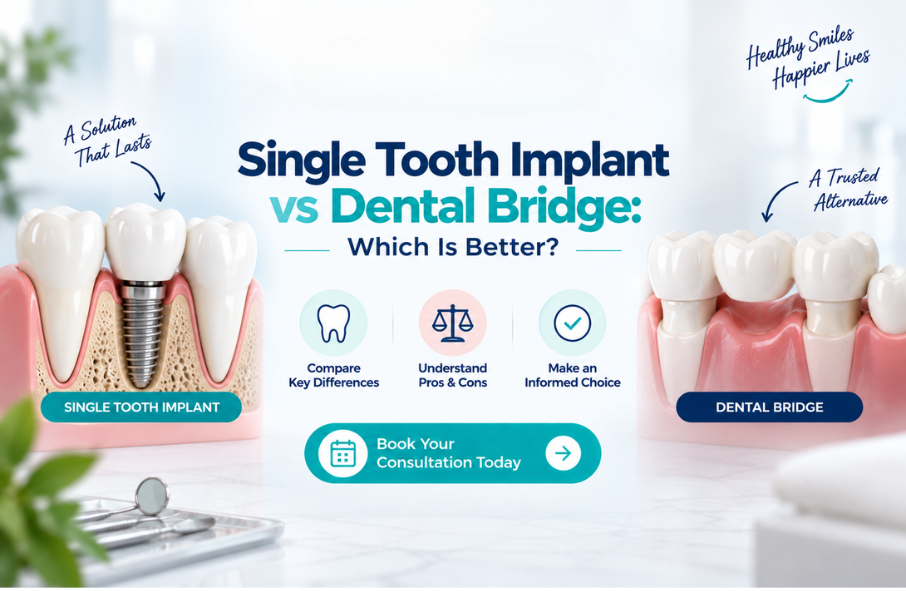
Single Tooth Implant vs Dental Bridge: Which Is Better?

Losing a tooth can affect more than just your smile. A missing tooth may make chewing uncomfortable and can also change the way your remaining teeth function.

Two commonly considered options for replacing a single missing tooth are a dental implant and a dental bridge.

But which option is better?

The answer depends on factors such as your oral health, jawbone condition, neighbouring teeth, treatment preferences, budget and long-term goals.

Let’s compare single tooth implants vs dental bridges to help you understand the differences.

What Is a Single Tooth Dental Implant?

A dental implant is a tooth-replacement option that uses an implant placed into the jawbone to support a replacement tooth.

A typical implant restoration involves:

  • Dental implant
  • Abutment
  • Dental crown

The implant acts as the foundation, while the crown replaces the visible portion of the missing tooth.

Because implant treatment involves placement into the jawbone and subsequent healing, it generally requires multiple stages.

What Is a Dental Bridge?

A dental bridge replaces a missing tooth by using the neighbouring teeth or other suitable supporting structures.

In a traditional bridge, the artificial tooth is connected to crowns that fit over the supporting teeth.

Unlike an implant, a conventional dental bridge does not require placing an implant into the jawbone.

The suitability of a bridge depends on the condition and position of the teeth that will support it.


Dental Implant vs Bridge: Key Differences

Factor Single Tooth Implant Dental Bridge
Main support Dental implant Supporting teeth
Surgery Implant placement involves a surgical procedure Conventional bridge generally does not require implant surgery
Treatment stages Usually multiple stages Often fewer stages
Effect on neighbouring teeth Does not require them to support the replacement tooth Supporting teeth are involved
Jawbone Implant is placed in the jawbone Does not replace the tooth root
Treatment timeline Can involve a healing period Often completed more quickly
Maintenance Requires normal oral hygiene and professional care Requires careful cleaning around and under the bridge
Suitability Depends on bone, gums and overall health Depends partly on supporting teeth

Which Looks More Natural: Implant or Bridge?

Both dental implants and bridges can be designed to provide a natural-looking result.

The appearance depends on factors such as:

  • Position of the missing tooth
  • Shape and shade of the restoration
  • Gum condition
  • Restoration material
  • Dental laboratory work
  • Dentist’s treatment planning

A properly planned restoration can be designed to blend with the surrounding teeth.

Which Option Is Better for Your Neighbouring Teeth?

This is an important difference between the two treatments.

A conventional dental bridge relies on neighbouring teeth for support.

A single dental implant is designed to support the replacement tooth independently rather than using adjacent natural teeth as bridge supports.

However, this does not automatically mean an implant is suitable for every patient.

Your dentist needs to evaluate the condition of your gums, jawbone and surrounding teeth before recommending an option.

Dental Implant vs Bridge: Which Lasts Longer?

The longevity of either restoration depends on several factors.

These include:

  • Oral hygiene
  • Gum health
  • Bite forces
  • Smoking or tobacco use
  • Quality of the restoration
  • Regular dental check-ups
  • How well the restoration is maintained

Dental implants can provide a long-term tooth-replacement solution when properly planned and maintained.

Dental bridges can also provide effective tooth replacement, but they require appropriate care and monitoring.

Rather than focusing only on a specific number of years, discuss the expected lifespan of your particular restoration with your dentist.

Which Is Faster: Implant or Bridge?

A dental bridge may generally be completed in fewer treatment stages than an implant.

Dental implant treatment can involve:

  1. Consultation and assessment
  2. Implant placement
  3. Healing period
  4. Abutment/restoration stage
  5. Placement of the final crown

The exact timeline varies depending on the patient’s dental condition and whether additional treatment is required.

If you are looking for a faster tooth-replacement option, ask your dentist whether a bridge is appropriate for your situation.

Which Is More Expensive: Implant or Bridge?

The total cost depends on the treatment plan.

An implant may have a higher initial treatment cost because the process can involve implant placement, healing, an abutment and a final crown.

A bridge may have a different overall cost depending on the number of teeth involved, materials used and complexity of treatment.

When comparing prices, ask your dentist for the complete treatment cost, rather than comparing only the price of an implant or crown.

What About Bone Loss After Losing a Tooth?

A natural tooth has a root within the jawbone.

When a tooth is lost, the surrounding bone can change over time.

A dental implant is placed into the jawbone and can provide a root-like foundation for the replacement tooth.

A conventional bridge replaces the visible tooth but does not replace the natural tooth root.

This is one of the important differences to discuss with your dentist when choosing between the two options.

When Might a Dental Implant Be Considered?

A dental implant may be considered when:

  • One tooth is missing
  • The surrounding oral tissues are suitable
  • There is adequate bone or a suitable plan to address bone deficiency
  • Gum health is appropriately managed
  • The patient is suitable for implant treatment
  • A fixed tooth-replacement option is desired

An examination is necessary to determine whether implant treatment is appropriate.

When Might a Dental Bridge Be Considered?

A bridge may be considered when:

  • There is a single missing tooth
  • Suitable supporting teeth are available
  • The patient wants a fixed replacement
  • Implant treatment is not preferred or is not suitable
  • The dentist determines that a bridge is appropriate

The condition of the neighbouring teeth is particularly important when planning a conventional bridge.


Dental Implant or Bridge: Which Should You Choose?

There is no universal answer.

A dental implant may be attractive if preserving the independence of neighbouring teeth and replacing the missing tooth with an implant-supported restoration are important considerations.

A bridge may be appropriate when suitable supporting teeth are available and a non-implant fixed replacement is preferred.

Your dentist should assess:

  • Missing tooth location
  • Gum health
  • Jawbone condition
  • Neighbouring teeth
  • Bite
  • Overall oral health
  • Treatment expectations
  • Budget and timeline

The best option is the one that fits your individual dental needs.

Can You Replace a Missing Tooth Without an Implant?

Yes. Dental bridges are one alternative to implant treatment.

Depending on your situation, your dentist may also discuss other tooth-replacement options.

Each option has different advantages, limitations, costs and maintenance requirements.

A professional evaluation can help you compare them rather than choosing based only on online information.

Dental Implants and Bridges in Pune

If you are considering a dental implant or bridge in Pune, start with a comprehensive dental examination.

At Dental Galaxy, patients can consult professional dental doctors to discuss missing teeth and possible tooth-replacement options.

The appropriate treatment depends on the condition of the missing-tooth area, neighbouring teeth, gums and supporting bone.

A personalised treatment plan can help you understand the recommended procedure, expected timeline and associated costs.

Final Thoughts

When comparing a single tooth implant vs dental bridge, neither option is automatically better for everyone.

An implant can provide an independent foundation for a replacement tooth, while a conventional bridge uses supporting teeth to replace the missing tooth.

Your oral health, jawbone, neighbouring teeth, treatment preferences, timeline and budget all matter when making the decision.

If you have a missing tooth, consult a qualified dental professional before choosing a treatment. A detailed examination can help determine whether a dental implant, bridge or another replacement option is most appropriate for you.

Dental Teeth

Dental Implants in Pune: Cost, Procedure, Benefits & Recovery

Missing a tooth can affect more than just your smile. It may make chewing difficult, affect your confidence and, depending on the situation, influence the way your remaining teeth function.

If you are looking for a long-term tooth replacement option, dental implants in Pune may be worth discussing with a dental professional.

Dental implants are designed to replace missing teeth and can provide a stable foundation for a replacement tooth. However, implant treatment is not identical for every patient. Your oral health, bone condition, number of missing teeth and overall treatment requirements can influence the recommended approach.

What Are Dental Implants?

A dental implant is a tooth-replacement solution that uses an implant placed in the jawbone to support a dental restoration.

Depending on the treatment plan, the implant can support a crown, bridge or other dental prosthesis.

Unlike removable dentures, an implant-supported tooth is anchored to the jawbone.

The treatment is planned according to the patient’s individual dental condition and the location and number of missing teeth.

Who May Need Dental Implants?

Dental implants may be considered for people who have one or more missing teeth and are looking for a fixed tooth-replacement option.

A dentist may evaluate factors such as:

  • Number of missing teeth
  • Location of missing teeth
  • Gum health
  • Jawbone condition
  • Overall oral health
  • Existing dental restorations
  • Treatment expectations

Not every patient will be suitable for the same implant procedure. A professional examination is therefore an important first step.

What Are the Benefits of Dental Implants?

Dental implants can offer several potential benefits when appropriately planned and placed.

Improved Smile

Replacing a missing tooth can help restore the appearance of your smile.

Support for Chewing

A properly planned implant-supported restoration can help restore function when a tooth is missing.

Fixed Tooth Replacement

Dental implants are designed to provide a stable foundation for a replacement tooth rather than relying on a removable appliance.

Natural-Looking Appearance

A dental crown placed over an implant can be designed to complement the appearance of the surrounding teeth.

Support for Long-Term Oral Function

Replacing missing teeth can be part of a broader approach to maintaining oral function and dental health.

Your dentist can explain which benefits are relevant to your individual situation.

What Is the Dental Implant Procedure?

The exact implant process varies depending on the patient’s needs.

A typical treatment plan may involve several stages.

1. Dental Examination

Your dentist first evaluates your teeth, gums and overall oral health.

The implant site and surrounding structures may also need to be assessed before treatment.

2. Treatment Planning

The dentist develops a treatment plan based on the number and location of missing teeth and the condition of the supporting structures.

3. Implant Placement

The dental implant is surgically placed into the jawbone at the planned location.

4. Healing Period

The implant requires a period of healing so that it can integrate with the surrounding bone.

5. Final Restoration

Once the implant has healed sufficiently, a dental restoration such as a crown may be placed to complete the treatment.

The timeline can vary considerably depending on individual treatment requirements.

How Long Does Dental Implant Treatment Take?

Dental implant treatment is not necessarily completed in a single appointment.

The overall timeline can depend on:

  • Number of implants
  • Location of the implant
  • Bone condition
  • Gum health
  • Need for additional procedures
  • Healing response
  • Type of final restoration

Some patients may require additional preparation before implant placement.

Your dentist can provide a more specific treatment timeline after examining your teeth and planning the procedure.

Do Dental Implants Hurt?

Dental implant placement is performed using appropriate dental anaesthesia.

Some discomfort, swelling or sensitivity may occur after the procedure as the area heals.

Your dental professional will provide aftercare instructions to help you manage the recovery period.

If you experience severe or persistent pain after treatment, contact your dentist for an assessment.

What Is Recovery Like After Dental Implant Placement?

Recovery varies between patients.

Your dentist may provide instructions regarding:

  • Oral hygiene
  • Eating and drinking
  • Physical activity
  • Medication, if prescribed
  • Caring for the treatment area
  • Follow-up appointments

Following the instructions provided by your dental professional can support the healing process.

It is important not to compare your recovery timeline directly with another person’s experience because implant treatment and healing can differ significantly.

What Is the Cost of Dental Implants in Pune?

The cost of dental implants in Pune varies depending on the individual treatment plan.

Factors that can influence the overall cost include:

  • Number of implants required
  • Type of implant
  • Type of final restoration
  • Diagnostic examinations
  • Condition of the jawbone
  • Gum health
  • Additional procedures, if required
  • Materials used

For this reason, there is no single dental implant cost that applies to every patient.

A consultation allows your dentist to assess your situation and provide a treatment plan with the associated costs.

Do You Need Bone Grafting for Dental Implants?

Not every patient requires bone grafting.

The amount and condition of available bone at the implant site can influence treatment planning.

If the supporting bone is not sufficient for the planned implant, your dentist may discuss additional procedures or alternative treatment options.

The need for such treatment can only be determined after appropriate clinical assessment.

Can Dental Implants Replace Multiple Missing Teeth?

Dental implants can be used in different treatment situations, including the replacement of individual or multiple missing teeth.

The number of implants required depends on the specific treatment plan.

For multiple missing teeth, an implant-supported bridge or another implant-supported restoration may sometimes be considered.

Your dentist can explain the available options based on the location and number of missing teeth.

How Long Do Dental Implants Last?

The longevity of dental implants can vary depending on several factors.

These may include:

  • Oral hygiene
  • Gum health
  • General dental health
  • Bite forces
  • Smoking or tobacco use
  • Regular dental check-ups
  • Quality of aftercare

Good oral hygiene and regular professional dental care are important for maintaining implant-supported restorations and the surrounding tissues.

Are Dental Implants Better Than Dentures?

Dental implants and dentures are different tooth-replacement options.

Dentures are removable appliances designed to replace missing teeth, while implants are placed into the jawbone and can support fixed restorations.

The most appropriate choice depends on factors such as:

  • Number of missing teeth
  • Bone condition
  • Oral health
  • Budget
  • Personal preference
  • Treatment goals

There is no single tooth-replacement option that is ideal for everyone.

A dental consultation can help you compare the available choices.

Are Dental Implants Safe?

Dental implants are a commonly used tooth-replacement treatment, but like any dental procedure, treatment involves considerations and potential risks.

A dentist will assess your oral health and treatment suitability before recommending implants.

Existing gum disease, inadequate bone support or other dental conditions may need to be addressed as part of the treatment plan.

Following professional instructions and attending recommended follow-up appointments are important parts of implant care.

How Should You Care for Dental Implants?

Good oral hygiene remains important after implant treatment.

Your dentist may recommend:

  • Regular brushing
  • Cleaning between teeth
  • Professional dental check-ups
  • Appropriate cleaning around the implant
  • Avoiding habits that may affect oral health

Dental implants do not mean that you no longer need regular dental care.

When Should You Consider a Dental Implant?

If you have a missing tooth and are considering a fixed replacement, a consultation can help you understand whether an implant may be suitable.

You may want to discuss implants if:

  • You have one or more missing teeth
  • You find removable dentures inconvenient
  • You want a fixed tooth-replacement option
  • You have difficulty chewing because of missing teeth
  • You are concerned about the appearance of a missing tooth

The sooner you understand your options, the easier it may be to plan appropriate treatment.

Choosing a Dental Implant Dentist in Pune

Choosing the right dental clinic is an important part of implant treatment.

When searching for a dental implant dentist in Pune, consider whether the clinic can evaluate:

  • Your overall oral health
  • Gum condition
  • Bone support
  • Number and location of missing teeth
  • Suitable implant options
  • Final restoration
  • Long-term maintenance

Dental Galaxy is a multi-speciality dental clinic in Pune with locations listed at Bajirao Road and Baner. Its dental team includes professionals with expertise across different areas of dentistry, including implant-related dental care.

A professional consultation can help you understand whether dental implants are appropriate for your particular dental condition.

Final Thoughts

Dental implants in Pune can be an option for replacing missing teeth and restoring both appearance and function. However, implant treatment needs to be planned according to each patient’s oral health, bone condition, number of missing teeth and treatment goals.

The cost, treatment timeline and procedures required can therefore vary from one patient to another.

At Dental Galaxy, patients can consult professional dental doctors for personalised dental implant guidance and treatment planning. The multi-speciality dental team can assess your oral health and discuss suitable tooth-replacement options based on your individual needs.

If you are considering dental implants in Pune, a professional consultation is a useful first step to understand your treatment options, expected timeline and associated cost.

Dental

Get A Perfect Smile With Implant Dentistry

An implant denture is a long-durable screw that is placed directly into your jaw bone. It fuses with the bone, forming the basis for the new, tailored tooth replacements known as dental crowns, which would have the appearance, feel, and solidity of strong, natural teeth. Dental implants can be used to replace just a single tooth or even all 28 teeth. Implants stay in position so you can smile, eat, and converse without worrying about it falling out. Titanium, which is biocompatible, lightweight, and extremely robust, is used in the majority of contemporary implants.

Who is a suitable candidate for dental implants?

Generally, people choose implants after having a tooth pulled due to disease or decay. When a root canal or apicoectomy has failed, extracting the affected tooth and replacing it with an implant is more beneficial than attempting to keep it. All-on-4 dental implants or individual implants can replace a whole top or bottom arch of teeth as a solution to removable dentures.

Ideal candidates generally have good dental health, with healthy gums and sufficient bone structure in the bottom jaw to sustain the implant. Heavy smokers, those with heart or gum problems, or those having radiotherapy to the head and neck might not be suitable candidates.

A dental bone graft can strengthen the location for those who don’t have enough bone in their jaw to sustain the implant. This procedure requires three to four months of healing period before the bone is adequate for dental implant insertion.

Dental implant failure can be caused by autoimmune disorders such as rheumatoid arthritis or diabetes, which can impede osseointegration (the process by which the implant merges with the jawbone). You may not be a good candidate if you have one of these conditions.

Some specific heartburn and depression drugs have also been reported to decrease bone regeneration, resulting in dental implant failure.

The Benefits of Dental Implants

  • In look, feel, and function, dental implants are similar to natural teeth.
  • Dental implants remain in place and do not need to be removed for cleaning or eating; they only require the same brushing, flossing, and regular dental examinations as natural teeth.
  • In contrast to dental bridges and dentures, which may need to be updated, these replacement teeth are built to survive for decades.
  • Implants contribute to the stimulation of jawbone development and the prevention of bone loss.
  • They preserve your natural facial structure and grin.

Dental Implants’ Drawbacks

  • Dental implants may be rather pricey.
  • It could take several months for new jaw bone development to progress sufficiently to allow you to complete the dental implant process.
  • Where the inserted metal implant appears through thin tissue, your gum may appear grey or black.

Can anyone undergo a dental implant years after they’ve had my tooth extracted?

It is typically suggested that a removed tooth be replaced within a year following extraction, to avoid teeth from drifting and bone loss in the extraction region. Receiving your implant relatively soon might save your money on orthodontics and bone grafting.

Losing a tooth might be distressing, exposing yourself to an imperfect smile, dental misalignment, and reduced self-esteem. Implants are custom-made dental roots that replace missing teeth from the top to the bottom, correcting your bite and increasing your self-esteem. Do you need to replace a lost tooth? At Dental Galaxy, we can explain the advantages of implant treatment to you.

Dental

Life Span Of Dental Implants

Dental implants are as durable and long-lasting as your natural teeth. Unlike fixed bridges or dentures, dental implants will not affect nearby healthy teeth or lead to bone deterioration in the jaw. If properly cared for, dental implants can last a lifetime.

While there are many treatment options for tooth replacement, dental implants are preferred because they provide a truly reliable, permanent, conservative solution for restoring appearance and function.

Dental

How Does The Dentist Diagnose Periodontitis, And How is it Treated?

Periodontal disease is diagnosed by your dentist or periodontist (gum specialist) during your oral examination. A periodontal probe (small dental instrument) is gently used to measure the sulcus (pocket or space) between the tooth and the gums. Your dentist will use pocket depths, amount of bleeding, inflammation, tooth mobility, etc. to make a diagnosis of periodontal disease.

The main aim of treatment is to clean out bacteria from the pockets around the teeth and prevent further destruction of bone and tissue.

Nonsurgical treatments

If periodontitis isn’t advanced, treatment may involve less invasive procedures, including:

  • Scaling. Scaling removes tartar and bacteria from your tooth surfaces and beneath your gums. It may be performed using instruments, a laser, or an ultrasonic device.
  • Root planing. Root planing smooths the root surfaces, discouraging further buildup of tartar and bacteria.
  • Antibiotics. Topical or oral antibiotics can help control bacterial infection.

Surgical treatments

If you have advanced periodontitis, treatment may require dental surgery, such as:

  • Flap surgery (pocket reduction surgery). Your periodontist makes tiny incisions in your gum so that a section of gum tissue can be lifted back, exposing the roots for more effective scaling and root planing. After you heal, it’s easier to clean these areas and maintain healthy gum tissue.
  • Soft tissue grafts. This procedure can help reduce further gum recession, cover exposed roots.
  • Bone grafting. This procedure is performed when periodontitis has destroyed the bone surrounding your tooth root. The bone graft helps prevent tooth loss by holding your tooth in place.
  • Guided tissue regeneration. This allows the regrowth of bone that was destroyed by bacteria. A special piece of biocompatible fabric is placed between the existing bone and your tooth. The material prevents unwanted tissue from entering the healing area, allowing bone to grow back instead.
Dental

Dental Implant Care

Taking care of your implant is just as important as cleaning your natural teeth. Your implant and your natural teeth are similar because they both rely on healthy tissue for support and both can build up plaque. It’s important to remove that plaque because it can develop into an infection. If the infection isn’t properly treated, it can result in a loss of bone around the implant which could progress to the loss of the implant itself.

Dental implants don’t require any special products. Just a simple brush and floss will do the job. If they are properly cared for, they can last a lifetime.

Dental Teeth

Bleeding Gums Causes

Occasional bleeding of the gums can be caused by brushing your teeth too vigorously. Frequent gum bleeding can be caused by conditions, including:

Gingivitis

The accumulation of plaque near gums can also cause gingivitis. Symptoms of gingivitis include swollen and bleeding gums.

Periodontitis

Periodontal disease is an infection of the gums and supportive tissues that connect your teeth and gums. Periodontitis can cause your gums to bleed and teeth to loosen.

Vitamin deficiencies

Vitamin C and vitamin K deficiencies can also cause gums to bleed easily.

Pregnancy

Hormonal changes that occur during pregnancy can cause bleeding of the gums.

Medications

Taking certain medications, like blood thinners can cause bleeding gums.

Consult your dentist/periodontist (gum specialist) for a definite diagnosis. Treatment of bleeding gums will vary according to cause.

Posts pagination