If you have a missing tooth and are considering dental implants, understanding the dental implant procedure can make the treatment process easier to understand.
Unlike a conventional dental filling or crown, implant treatment generally involves several stages. These may include an initial dental examination, treatment planning, implant placement, a healing period and placement of the final tooth restoration.
The exact process and timeline vary depending on your oral health, the location of the missing tooth and whether additional treatment is required.
Here is what you can generally expect during dental implant treatment.
What Is a Dental Implant?
A dental implant is a tooth-replacement solution designed to support a dental restoration.
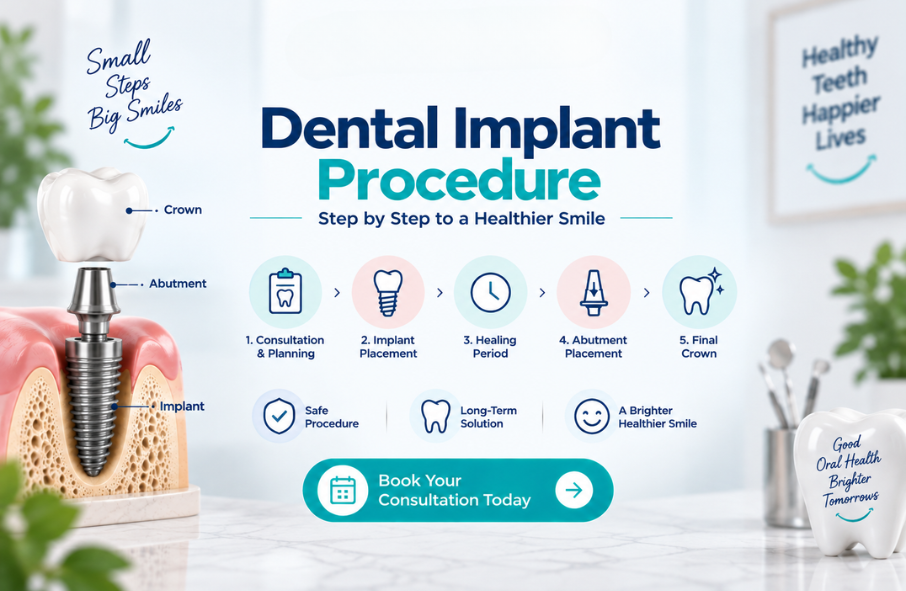
A typical implant-supported tooth consists of:
- Dental implant – placed in the jawbone
- Abutment – connects the implant to the restoration
- Dental crown – replaces the visible portion of the missing tooth
The implant provides a foundation for the replacement tooth.
Dental Implant Procedure: Step-by-Step
Step 1: Initial Dental Consultation
The first stage is an examination with your dentist.
Your dentist will assess:
- The missing tooth or teeth
- Surrounding teeth
- Gum health
- Jawbone condition
- Bite and overall oral health
- Your treatment expectations
Your dental history and existing oral conditions may also be considered.
This assessment helps determine whether dental implants are an appropriate option for you.
Step 2: Diagnostic Evaluation and Treatment Planning
Dental implant treatment requires careful planning.
Depending on your case, your dentist may recommend dental imaging to evaluate the implant site and surrounding structures.
The treatment plan may consider:
- Implant position
- Number of implants
- Type of restoration
- Available bone
- Gum condition
- Need for additional procedures
Your dentist can also explain the expected treatment stages, timeline and costs before treatment begins.
Step 3: Preparing the Mouth for Implant Treatment
Not every patient can proceed directly to implant placement.
If problems such as untreated dental disease or gum problems are present, they may need to be addressed first.
Some patients may also require additional procedures if there is insufficient bone at the planned implant site.
The preparation required depends entirely on the individual’s dental condition.
Step 4: Dental Implant Placement
Once the site is ready, the dental implant can be surgically placed into the jawbone.
The procedure is performed using appropriate local anaesthesia or other pain-management methods as determined by the dental professional.
The implant is positioned carefully according to the treatment plan.
After placement, the area needs time to heal.
Step 5: Healing and Implant Integration
After the implant is placed, a healing period is required.
During this stage, the implant integrates with the surrounding jawbone.
The length of healing varies from patient to patient and depends on factors such as:
- Implant location
- Bone condition
- Overall oral health
- Individual healing response
- Whether additional procedures were performed
Your dentist will determine when the implant is ready for the next stage of treatment.
Step 6: Abutment Placement
Once the implant has sufficiently healed, the next stage involves connecting the implant to the final restoration.
An abutment serves as the connection between the dental implant and crown or other restoration.
The timing and method of abutment placement depend on the treatment approach used for your case.
Step 7: Crown or Final Restoration
The final restoration is the part designed to replace the visible missing tooth.
For a single missing tooth, this is commonly a dental crown.
The restoration is planned to fit the implant and work with the surrounding teeth.
Your dentist and dental laboratory consider factors such as:
- Tooth shape
- Tooth colour
- Size
- Position
- Bite
- Overall smile appearance
The final goal is to provide a functional and natural-looking tooth replacement.
How Long Does the Dental Implant Procedure Take?
Dental implant treatment is not necessarily completed in a single appointment.
The overall timeline can depend on:
- Number of missing teeth
- Implant location
- Bone condition
- Gum health
- Need for additional treatment
- Healing response
- Type of restoration
The surgical implant placement itself may be completed during one appointment, but the complete treatment includes subsequent healing and restoration stages.
Your dentist can provide a more specific timeline after evaluating your case.
Is Dental Implant Surgery Painful?
Pain and discomfort vary from person to person.
During implant placement, appropriate anaesthesia is used to help manage discomfort.
After treatment, some patients may experience temporary:
- Tenderness
- Swelling
- Mild discomfort
- Sensitivity around the treatment area
Your dentist will provide appropriate post-treatment instructions and explain how to care for the area during recovery.
If you experience unexpected or severe symptoms, contact your dental professional promptly.
What Should You Do After Dental Implant Placement?
Following your dentist’s aftercare instructions is important for recovery.
Depending on your treatment, you may be advised to:
- Maintain appropriate oral hygiene
- Follow dietary instructions
- Avoid disturbing the surgical area
- Attend scheduled follow-up appointments
- Take prescribed medication as directed
- Avoid smoking or tobacco products
Your dentist will provide instructions specific to your procedure.
Can You Get a Temporary Tooth During Implant Treatment?
In some situations, a temporary tooth replacement may be considered while the implant is healing.
Whether this is appropriate depends on factors such as:
- Implant location
- Treatment plan
- Stability of the implant
- Type of restoration
- Your dentist’s clinical assessment
Ask your dentist what temporary replacement options are suitable for your case.
What Happens If You Need Bone Grafting?
Some patients may have insufficient bone at the planned implant site.
In such situations, your dentist may discuss a bone-grafting procedure or another appropriate treatment approach.
This can add an additional stage to the treatment and may affect the overall healing timeline.
However, not everyone who receives a dental implant requires bone grafting.
The need can only be determined after appropriate examination and imaging.
How Many Appointments Are Needed for Dental Implants?
The number of appointments varies.
A typical treatment may involve appointments for:
- Initial consultation
- Diagnostic evaluation
- Implant placement
- Follow-up during healing
- Abutment/restoration stage
- Final crown placement
Additional appointments may be required if other dental procedures are necessary.
What Happens After the Final Crown Is Placed?
Once your final restoration is fitted, maintaining good oral hygiene remains important.
Continue to:
- Brush regularly
- Clean around the implant and restoration
- Follow your dentist’s recommendations
- Attend regular dental check-ups
- Manage gum health
- Avoid habits that could damage your restoration
Dental implants are not maintenance-free. Professional monitoring can help identify potential problems early.
Who Is Suitable for Dental Implant Treatment?
Dental implant suitability depends on several individual factors.
Your dentist may evaluate:
- Oral health
- Gum condition
- Jawbone
- Missing tooth location
- Overall health
- Ability to maintain oral hygiene
- Treatment expectations
If additional dental treatment is needed, it may be recommended before proceeding with implant placement.
Therefore, an online checklist cannot determine whether implants are right for you. A professional dental evaluation is necessary.
Dental Implant Procedure in Pune
If you are looking for dental implant treatment in Pune, choosing a clinic that provides proper examination, treatment planning and follow-up care is important.
Dental Galaxy is a multi-speciality dental clinic in Pune with locations listed at Bajirao Road and Baner.
Patients considering dental implants can consult professional dental doctors to discuss their missing tooth, treatment options and individual implant requirements.
The treatment plan can then be developed according to the condition of the teeth, gums and supporting bone.
Final Thoughts
The dental implant procedure usually involves several stages rather than a single appointment.
The process can include consultation, diagnostic evaluation, treatment preparation, implant placement, healing, abutment placement and the final crown or restoration.
The exact procedure and timeline depend on your individual dental condition.
If you are considering dental implants, speak with a qualified dental professional who can examine your mouth, explain your options and create an appropriate treatment plan.
For patients considering dental implants in Pune, Dental Galaxy provides professional dental consultations to help patients understand their tooth-replacement options and plan appropriate treatment.